How to Identify Your Target Audience: A Practical Guide for Indie Authors
Learn how to identify your target audience with our guide for indie authors. Discover market research tactics and how to craft reader personas that sell books.
Posted by
 Pablo Yáñez
Related reading
How to Increase Book Sales on Amazon: An Author's Practical Guide
Learn how to increase book sales on Amazon with actionable strategies for metadata, pricing, ads, and cover design to amplify your KDP success.
A Practical Guide to Social Media Marketing for Authors
Struggling with social media marketing for authors? This guide offers real strategies to build your audience, engage readers, and turn followers into fans.
How to Get Book Reviews: A Practical Guide for Indie Authors
Struggling with how to get book reviews? Learn proven strategies for finding reviewers, crafting effective outreach, and leveraging reviews for more sales.
Ready to design your cover?
Use our AI book cover generator to create tailored book cover concepts in minutes.

If you want your book to sell, you have to stop guessing and start getting specific about who you're selling it to. This isn't just about marketing fluff; it's about using real data to pinpoint the exact person most likely to buy and love your story.
The result? A clear roadmap that guides every single design and marketing decision you make from here on out.
Why Knowing Your Reader Is Your Biggest Asset
Let's be blunt: you wrote a book you want people to read. And more importantly, to buy. While it’s tempting to think your brilliant story is for "everyone," successful book marketing is all about focus.
Pinpointing your reader is the most critical business decision you'll make as an indie author. It’s the bedrock for everything else—from choosing the right keywords on Amazon KDP to designing a cover that actually stops the scroll.
This isn’t about shrinking your book's potential. It's about concentrating your firepower where it will have the biggest impact. When you know your audience inside and out, your marketing stops being a shout into a void and becomes a one-on-one conversation with someone already waiting to hear from you.
From Broad Data to a Specific Reader
The path to identifying your target audience isn't a dark art; it's a funnel. You start broad and systematically narrow your focus until you have a crystal-clear picture of your ideal reader. This process is what turns creative hunches into informed, strategic choices.
It looks something like this:
- Broad Market Analysis: First, you zoom out and look at your genre's landscape. What are the big trends? Who's buying these books on Amazon and talking about them on Goodreads? This is your 30,000-foot view.
- Genre-Specific Expectations: Next, you dive into your specific subgenre. What visual cues and narrative tropes do readers expect? What do the covers of bestselling thriller books, for example, all have in common? You’re learning the language your readers already speak.
- Detailed Reader Persona: Finally, you pull all that research together into a single, detailed profile of your ideal reader. This "person" becomes your north star for writing blurbs, creating social media content, and even briefing a cover designer.
The real magic happens when you shift your thinking from a vague concept of "my readers" to a concrete understanding of "my reader." That one person makes it possible to create a book package that feels like it was made just for them, sparking an instant, powerful connection.
This process is a core part of building a solid author platform. We've outlined the key steps in a simple framework below.
Audience Identification Framework for Authors
This table summarizes the journey from a high-level market overview to a detailed reader profile that will guide your every move.
| Phase | Action | Goal |
|---|---|---|
| Market Analysis | Study genre bestsellers on Amazon, Goodreads, and KDP sales data. | Identify broad demographic trends, popular themes, and market size. |
| Competitor Deep Dive | Analyze the top 10-20 books in your specific subgenre. | Understand cover design conventions, blurb structures, and reader expectations. |
| Reader Profiling | Synthesize data into a detailed "reader persona" with a name, age, and habits. | Create a tangible guide for all marketing and design decisions. |
By following these phases, you're not just guessing—you're building a business case for your book's success, backed by data.
Understanding your audience is a universal principle for any creator, and you can get more tactics from this guide on how to identify your target audience with a concise playbook. For authors, this process is non-negotiable. It's directly tied to how your book gets discovered and whether it sells. By being methodical, you swap risky assumptions for solid insights and give your book its best shot at finding a home.
Using Market Data to Decode Your Genre's Readership
Stop guessing who your readers are. They're already out there, leaving a trail of digital breadcrumbs that tell you exactly what kind of book they're dying to buy. You don’t need a massive budget for this—your best research tools are the very platforms you already use: Amazon and Goodreads.
This isn't about casual browsing. It’s about being a detective, systematically piecing together clues to build a clear picture of your ideal reader. The idea is to drill down from the massive, noisy market to the specific niche where your book belongs.
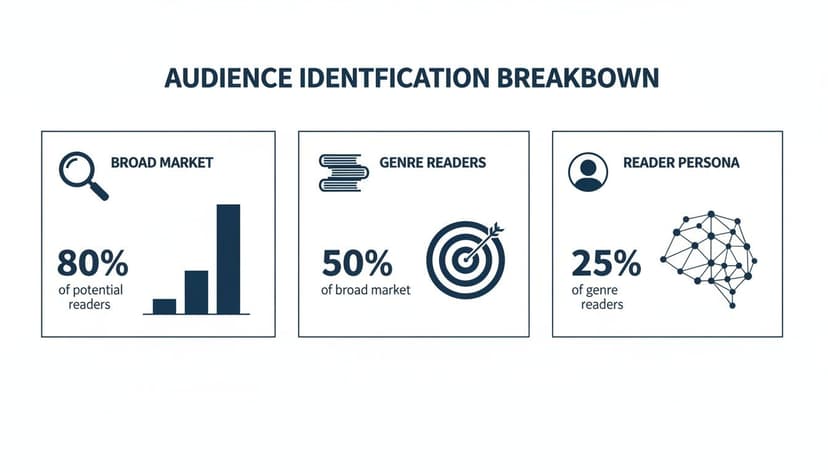
Think of it as a funnel. You start wide and methodically narrow your focus until you have a tangible profile that will guide every decision you make, from your cover design to your marketing copy.
Mine Amazon and KDP Categories for Gold
Amazon is more than a store; it's the single largest database of reader buying habits on the planet. Your first move is to find your book’s primary genre, but the real magic happens when you dive deeper into the niche subcategories. That’s where you’ll find your most passionate fans.
Once you’re in the right subgenre, your goal is to dissect the top 20-50 bestselling books. Look for patterns.
- Tropes and Themes: Are "enemies to lovers," "found family," or "one-last-job" stories dominating the charts? Jot down the top five recurring plot hooks you see.
- Character Archetypes: Do you keep seeing grizzled detectives? Witty heroines? Morally grey wizards? Knowing which protagonists are currently resonating with readers is a massive advantage.
- Keywords in Titles and Subtitles: Pay attention to how other authors signal their genre. A title like The Dragon's Curse: An Epic Fantasy Academy Romance is doing a ton of work to attract a very specific reader.
This process isn’t just academic; it gives you the visual language of your genre. These insights are absolutely critical when it comes to creating effective romance book covers or thriller covers that instantly tell a reader, "This book is for you."
Decode Reader Reviews on Goodreads
If Amazon shows you what people buy, Goodreads tells you why. Reader reviews are a goldmine of emotional, unfiltered feedback. The key is to look at both the glowing 5-star reviews and the scathing 1-star reviews for the top books in your niche.
A 5-star review reveals what hooks a reader and makes them a fan for life. A 1-star review often pinpoints the exact deal-breakers—a weak ending, an unlikable protagonist, or a misleading cover—that make a reader abandon a book. Both are equally valuable.
Look for words and phrases that pop up again and again. Do readers rave about "fast-paced action" or "swoon-worthy moments"? Do they complain about "info-dumping" or a "slow start"? This is your audience handing you a blueprint for how to write a book they’ll love.
The Financial Case for Audience Research
Knowing your reader isn't just a creative exercise; it's a financial necessity. The global book market is projected to hit USD 135.49 billion by 2026, and you’re competing for a slice of that pie. With over 51% of sales happening online and 1.7 million new titles hitting KDP every year, a poorly targeted book is basically invisible.
In fact, a staggering 80% of indie authors point to poor cover design as a primary reason for low sales—a problem that almost always starts with not knowing who the cover is for. You can dive deeper into these trends in this full book market report.
This is why your research is so important. When you know exactly who you're selling to, you can design a cover, write a blurb, and run ads that speak directly to their desires. This is where tools can help you connect the dots. You can use an AI tool, for instance, to quickly test visual concepts based on your research, so you can see what might click with your target readers before you spend a dime on a final design.
Bring Your Ideal Reader to Life with a Persona
All that market research you did? It's gold. But data alone is just a pile of numbers—it doesn't have a personality. To really connect with your audience, you need to turn those stats into someone you can actually picture. This is where you build your ideal reader persona.
A reader persona is essentially a character sketch of your perfect reader. It's a semi-fictional profile that transforms the faceless "market" into a single, relatable person. This isn't just a fun creative exercise; it's a powerful tool that gives you a specific individual to write for and market to.

Think about it. It’s nearly impossible to write a book for "women aged 30-40." But writing for "Chloe, a 35-year-old nurse who escapes her stressful shifts with a glass of wine and a twisty psychological thriller"? That's a target you can hit every time.
Go Beyond Demographics with Psychographics
Demographics like age, gender, and location are the skeleton of your persona. The real magic, though, comes from psychographics—the psychological details that explain why your reader makes the choices they do. This is where you give your persona a soul.
To dig into their psychographics, you need to ask questions that get at their real life:
- Media Diet: What podcasts are playing during their commute? Are they binge-watching the latest Netflix drama or scrolling #BookTok before bed? Where do they hang out online?
- Reading Rituals: Are they a Kindle die-hard, an audiobook fanatic, or someone who loves the feel of a real paperback? How do they find new books—Goodreads rabbit holes, book club picks, or recommendations from their favorite authors?
- Life and Loves: What are their biggest daily frustrations? What do they dream about? What makes them laugh? What are their non-negotiable "auto-buy" authors?
Answering these questions brings your persona to life. Suddenly, you understand the motivation behind their reading habits. This is the kind of insight that helps you build a strong author platform from the ground up. To see how this fits into the bigger picture, check out our guide on creating a brand strategy template for authors.
A Simple, Actionable Persona Template
Don't overcomplicate this. Your goal is a practical, one-page document you can reference constantly. Just focus on the details that will actually influence your decisions.
Core Persona Elements:
- Name & Photo: Give them a name and find a stock photo that fits. It sounds simple, but it makes them feel instantly real.
- The Vitals:
- Age: (e.g., 28)
- Occupation: (e.g., Graphic Designer)
- Location: (e.g., Mid-sized city, probably somewhere with good coffee shops)
- Reader Profile:
- Favorite Genres: (e.g., Urban Fantasy, Cozy Mystery with a hint of romance)
- Preferred Format: (e.g., Mostly ebooks on a Kindle for convenience)
- Discovery Method: (e.g., Scours Amazon's "also-boughts," trusts #BookTok creators)
- Hopes & Headaches:
- Why They Read: (e.g., To escape a boring job and get lost in a world with magic)
- Bookish Pet Peeves: (e.g., Hates weak world-building, info-dumps, and predictable plots)
A sharp, well-defined persona is your creative North Star. When you're stuck on a plot point, a dialogue choice, or even the color scheme for your cover, you can just ask, "What would Chloe think?" It keeps every decision you make grounded in what your reader actually wants.
This process moves you from abstract theory to having a practical guide for your entire author career. The end result is more than just knowing your audience—it’s a better book, a cover that sells, and marketing that feels authentic because it is.
If you want to speed up the process, you can explore the lunabloomai app for persona building, which uses AI to help you construct these detailed profiles.
Analyzing Competitor Covers to Meet Reader Expectations
Let's be honest: your book cover is the single most important piece of marketing you'll ever create. It’s not just pretty art. It's a flashing neon sign that screams your book's genre, tone, and promise to a potential reader scrolling at lightning speed. This is where all your audience research pays off, turning abstract data into something you can actually see.
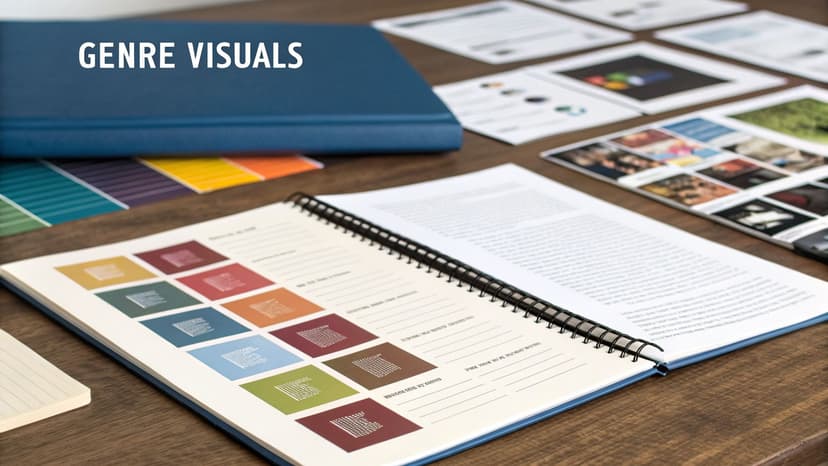
Think of yourself as a genre detective. Your first mission is to dive deep into the top 20-50 bestselling books in your exact Amazon subcategory. And I don’t mean a quick glance. Open up a spreadsheet and get ready to catalog what you find. The goal is to spot the visual patterns that tell a reader, “Hey, this book is for you.”
Decoding Your Genre's Visual Language
Bestselling covers are almost never a happy accident. They’re meticulously designed to click with a specific audience’s expectations. As you comb through the top charts, look for the common threads.
Key Cover Elements to Track:
- Typography: What kind of fonts are popping up again and again? Are they the crisp, modern serifs of a legal thriller? Or are they the sweeping, elegant scripts that define historical romance? The font choice alone sets the entire mood.
- Color Palette: Take note of the dominant color schemes. Psychological thrillers often lean on moody blues and dark grays, while contemporary romance might favor bright, warm palettes. These colors trigger an instant emotional connection.
- Imagery & Composition: What subjects are on the covers? A tight close-up on a face often signals a character-driven story. A lone figure against a vast landscape can suggest an epic journey or high-stakes adventure. Pay just as much attention to how these elements are arranged.
Once you can spot the top three visual tropes in your subgenre, you’ve basically learned the secret handshake. You know the visual language that lets readers instantly recognize your book as something they'll love. This isn’t about making a carbon copy; it's about joining a conversation that’s already happening.
The Hard Numbers Behind Good Design
This kind of visual research is non-negotiable, especially for indie authors. Even though hard copies still made up 76.59% of the book market in 2025, cover quality influences up to 60% of buying decisions in both physical and online stores.
And with self-publishing on track to make up 40% of all U.S. book sales by 2026, a genre-savvy cover is your most powerful weapon. In fact, a staggering 85% of readers admit they judge a book by its cover in just three seconds online. Authors who nail their genre's visual cues have reported sales boosts of up to 35%. You can dig into more of this data in this book market analysis.
Balancing Convention with Uniqueness
The point of all this research isn't to create a clone. It’s to understand the rules so you know how to bend them just enough to get noticed.
Your cover needs to do two things at once: it should fit in enough to be instantly recognizable to your target audience, but it also has to stand out enough to be memorable.
Think of it this way: your cover needs to whisper, "this is the genre you love," while shouting, "but you've never read a story quite like this one." You do this by taking a proven convention and giving it a fresh twist.
For example, if the fantasy reader cover examples in your niche all feature a woman in leather with glowing hands, maybe your cover uses a similar pose but sets her in a completely unexpected location. Or perhaps you use the genre’s typical color palette but with a bold typographic style that no one else is using. The best covers feel both familiar and fresh.
This is the perfect stage for experimentation. Once you've done your homework, creating mockups with an AI tool can help you visualize dozens of concepts quickly. You can test different combinations of fonts, images, and colors based on your research, helping you find that sweet spot between fitting in and standing out without blowing your budget. For more on this, check out our deep dive on how to design a book cover.
Engaging Directly with Your Potential Readers
All the market data and competitor analysis in the world gives you a solid foundation, but nothing beats hearing directly from potential readers. This is the step where you stop making educated guesses and start getting real-world validation. It's time to get out there and actually talk to people.
Forget expensive focus groups. For an indie author, primary research means tapping into the authentic conversations already happening online and finding simple ways for readers to share their honest opinions with you.
Listen In on Authentic Reader Conversations
Readers are always talking about the books they love and hate. You just have to know where to find them. This practice, often called social listening, is your ticket to gathering raw, unfiltered feedback on the tropes, characters, and plot points that genuinely land with your audience.
Your mission is to become a fly on the wall in the digital spaces your ideal reader calls home.
- Genre-Specific Subreddits: Reddit is a goldmine. Head over to subreddits like
r/Fantasy,r/RomanceBooks, orr/PrintSF. Search for post titles like "Looking for a book with..." or "What's a trope you're tired of?" These threads are a direct line into your audience's desires and pet peeves. - Facebook Groups: Look for private groups dedicated to your specific genre or subgenre (think "Cozy Mystery Readers" or "Epic Fantasy Fans"). The conversations here are often far more detailed and intimate than what you'll find on public forums.
- TikTok's #BookTok: Don't just watch the viral videos—read the comments. This is where you'll see the immediate, gut-level reactions to books and covers. It’s a powerful way to understand what makes a reader feel seen.
By quietly observing, you start to grasp the why behind reader preferences. This gives all that market data you collected some much-needed context.
Use Surveys to Validate Your Assumptions
Listening is fantastic for discovering new ideas, but surveys are perfect for validating them. They let you ask direct questions to a group you’ve already found—like your email subscribers or beta readers—to confirm if your hunches are on the right track. You don't need anything fancy; free tools like Google Forms work perfectly.
Just keep your surveys short and to the point. Ditch vague questions like, "What do you like to read?" Instead, get specific:
- "Which of these three cover concepts best screams 'slow-burn, enemies-to-lovers' romance?"
- "On a scale of 1-5, how important is a fast-paced opening chapter in a thriller for you?"
- "Would a book with a map at the beginning make you more likely to pick it up?"
This kind of direct feedback is priceless. For instance, discovering that 75% of your survey group prefers covers with certain trends can completely change your design direction. When you look at the KDP bestseller lists—where romance currently holds a 28% market share—you can see how these visual preferences directly translate into sales. Even subtle technical choices, like using metadata-enhanced covers, can boost a book's algorithmic discoverability by as much as 37%. You can dig deeper into how print and digital trends are evolving by reading about the 2026 print market evolution.
The goal of a survey isn't to get a statistically perfect sample size. It's to get a gut check from the people who matter most—your core readers. Even ten responses from the right people are more valuable than a hundred from the wrong ones.
Participate Authentically in Author Communities
Author groups can be a fantastic resource for advice, but you need to approach them correctly. The golden rule is to give more than you take. Jump into discussions, offer your own perspective, and build relationships before you start asking for favors.
So, instead of a blunt post like, "Hey, what do you think of my cover?" try a more collaborative angle. "I'm debating between a character-focused cover and a symbolic one for my upcoming urban fantasy. For those who write in this space, what have you found connects best with readers?"
This frames you as a peer looking for insight, not a marketer after free work. You’ll get much more thoughtful answers and build some real goodwill. If you're not even sure who to survey, a great place to start is learning how to find beta readers who can provide that first wave of crucial feedback. By engaging directly, you're not just doing research—you're building a loyal fanbase before your book even goes on sale.
Common Questions About Finding Your Book's Audience
Figuring out your audience is rarely a straight line. It's totally normal to feel like you're trying to pin down a moving target, especially when your story doesn't fit neatly into one box.
Let's walk through some of the most common hurdles authors face and give you some clear, actionable ways to get past them with confidence.
What If My Book Fits into Multiple Genres?
First off, this is a good thing. A book that blends genres, like a sci-fi romance or a historical fantasy, has crossover appeal. The trick is to avoid confusing readers by trying to be everything to everyone at once.
You need to pick a primary genre. This is the genre that dictates your story’s core promise to the reader.
Think about it this way: what's the central conflict? In a "sci-fi romance," is the heart of the story the will-they-won't-they relationship, or is it the external sci-fi plot? If the romance is the engine driving the story forward, then your primary audience is romance readers who happen to enjoy a futuristic twist.
Your marketing needs to follow that lead:
- Cover Design: Your cover should scream romance first. Use the visual cues—the colors, fonts, and character poses—that romance readers instantly recognize. The sci-fi elements become the "flavor," hinted at in the background or through specific imagery.
- Amazon KDP Categories & Keywords: Plant your flag firmly in the romance categories. Then, use your keywords to bridge the gap with phrases like "futuristic romance," "alien romance," or "sci-fi romance."
- Book Blurb: Lead with the romantic hook. Draw the reader in with the relationship conflict, then sprinkle in the science fiction world-building to show them this isn't just another contemporary romance.
By focusing on your primary genre, you build a solid launchpad. Once you've hooked that core audience, it's much easier to attract secondary readers who are exploring from other genres.
How Specific Should My Reader Persona Be?
Your reader persona is an archetype, not a straightjacket. You want it to feel like a real person, but its purpose is to guide your marketing decisions, not to limit your creativity.
It's easy to get lost in the weeds here. Don't worry about their favorite color or what they had for breakfast. Focus on the details that actually matter to their reading life.
The goal is a persona defined by motivations, not just demographics. Knowing why they read is infinitely more powerful than knowing their job title.
For example, "Chloe, a 32-year-old accountant from Chicago" is way too specific and not very helpful.
A much better persona is: "A career-focused professional in her early 30s who escapes her high-stress job with fast-paced thrillers full of clever, unpredictable twists."
See the difference? This version gives you so much more to work with. You know she craves escapism, respects intelligence in a plot, and wants to be kept in suspense. That understanding shapes your book's pacing, the complexity of your twists, and even the kind of content you post on social media.
How Do I Know if I Have Identified the Right Audience?
Audience identification isn't a one-and-done task you check off your to-do list. It’s a constant process of listening and refining.
You'll know you're hitting the mark when your marketing stops feeling like shouting into a void and starts feeling like a conversation. You're looking for real-world feedback—your key performance indicators for audience fit.
Signs You’ve Found Your People
- Better Engagement: Your ads, emails, and social posts start getting more comments and clicks from people who get it. The conversations are about the story, not just a random "nice cover."
- Improved Ad Performance: Your cost-per-click (CPC) on ads might drop, and your conversion rate (clicks that turn into sales) goes up. This happens because you’re finally showing your book to people who are genuinely looking for it.
- Reviews That Get It: Your reader reviews start using the same kind of language you used in your persona. When a reviewer says, "This was exactly the kind of book I was hoping to find," you’ve nailed it.
- Consistent Sales: At the end of the day, sales are the ultimate confirmation. If your book is selling steadily in its target category, you've found your audience.
This feedback loop is everything. Post-launch data from sales reports, reader emails, and new reviews on sites like Goodreads will help you sharpen your aim. Maybe you find a whole secondary audience you never expected, or you realize your core readers are slightly older or younger than you first thought.
Don't be afraid to test and iterate. Using an AI tool to create and test different cover concepts for a newly discovered audience can be an effective way to adapt without committing to an expensive redesign. This is how you build a sustainable career—by listening, learning, and adjusting.
Ready to Create Your Own Book Cover?
Turn your story into a visual masterpiece. Fill in the details below to start generating professional covers instantly.
