Create Book Club Flyers That Attract More Readers
Learn to design and distribute effective book club flyers. Get practical tips and strategies to grow your readership and boost book sales.
Posted by
 Pablo Yáñez
Related reading
How to Increase Book Sales on Amazon: An Author's Practical Guide
Learn how to increase book sales on Amazon with actionable strategies for metadata, pricing, ads, and cover design to amplify your KDP success.
How to Identify Your Target Audience: A Practical Guide for Indie Authors
Learn how to identify your target audience with our guide for indie authors. Discover market research tactics and how to craft reader personas that sell books.
A Practical Guide to Social Media Marketing for Authors
Struggling with social media marketing for authors? This guide offers real strategies to build your audience, engage readers, and turn followers into fans.
Ready to design your cover?
Use our AI book cover generator to create tailored book cover concepts in minutes.

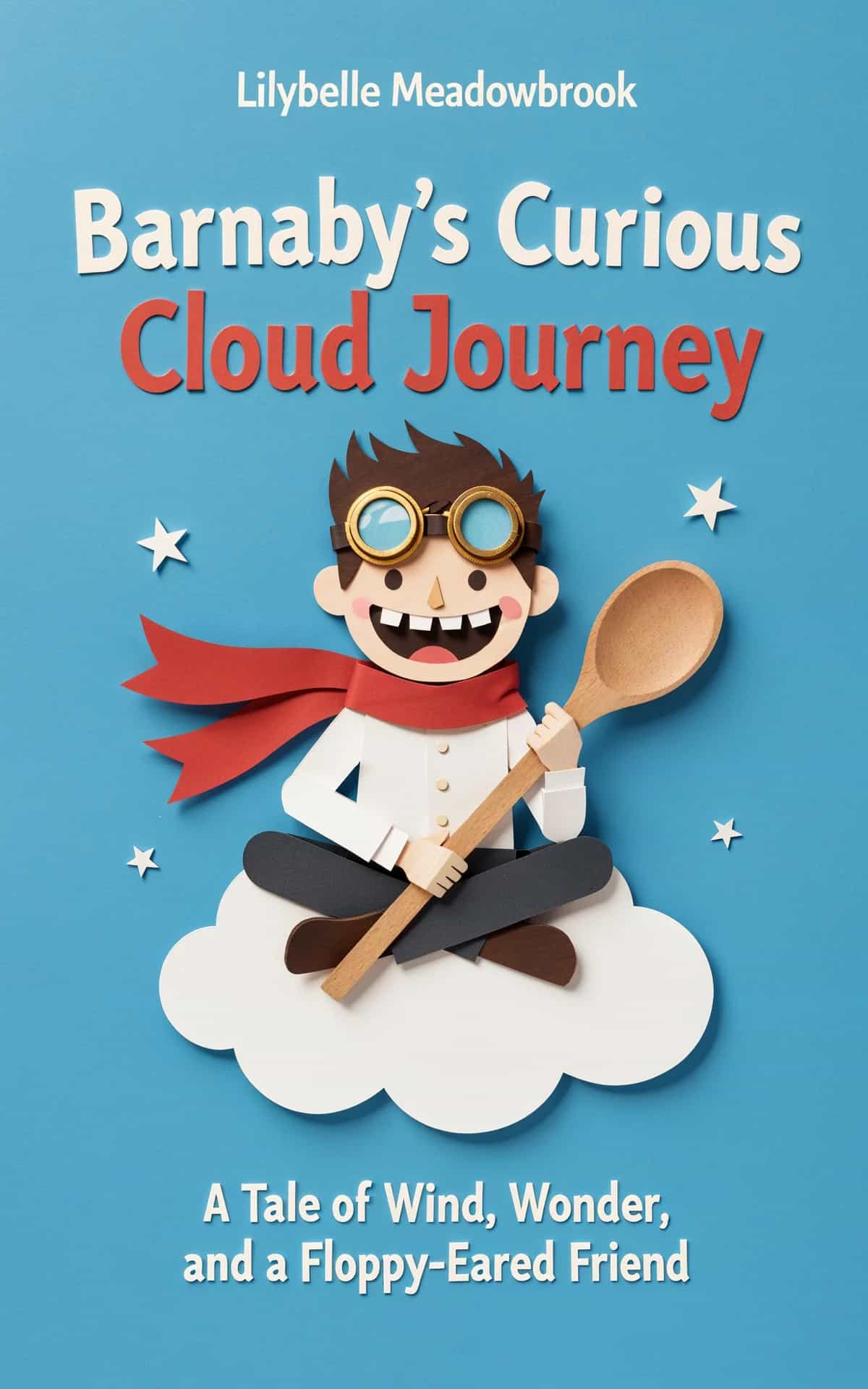
Book club flyers are an effective marketing tool for indie authors. In a world focused on digital ads, a well-designed piece of paper can get your book discovered by dedicated book clubs. It’s a direct line from your story to the physical spaces—like libraries and local bookstores—where real readers gather.
Why Book Club Flyers Are a Smart Move
In a marketing world saturated with digital noise, a physical flyer can be a secret weapon. For indie authors, especially those publishing on KDP, this often-overlooked tool offers a direct connection to passionate reading communities. This isn't about nostalgia; it's about a focused strategy to drive bulk sales and generate powerful word-of-mouth buzz.
Cut Through the Digital Clutter
Think about the last time you saw a compelling flyer on a coffee shop bulletin board. It stands out because it’s a real, physical object in a sea of fleeting digital ads. A book club flyer does the same for your novel, catching the eye of readers in the very places they already frequent.
That tangible connection is a massive advantage. While email campaigns and social media ads have their place, they often get lost in crowded inboxes and noisy feeds. A flyer, on the other hand, is a persistent, physical reminder of your book that an interested reader can take with them.
Target High-Value Readers Directly
Book clubs are an author's dream audience. They don't just buy one copy of a book; they buy in bulk. Getting your book chosen by a single club can mean 10, 15, or even 20 sales at once. Even better, these are dedicated readers who love to discuss, analyze, and recommend books they enjoy.
A flyer acts as your direct proposal to these groups. It presents your book as the perfect candidate for their next monthly read, complete with discussion points and a captivating premise.
This targeted approach puts your book directly in front of readers who are actively searching for their next discovery. This market is significant; in the US alone, an estimated 13 million adults belong to a book club, and printed materials have always been a key tool for these groups to find new titles. To dive deeper into how print supports these communities, you can find insights on promotional design strategies.
Showcase Your Book’s Best Asset
Your flyer’s most powerful weapon is its visual centerpiece: your book cover. A fantastic cover instantly communicates genre, tone, and professionalism—all critical for convincing a book club organizer to take a chance on your work. For example, a sharp, professional cover for a thriller immediately promises suspense and intrigue.
Before you design the flyer itself, you need a killer cover. You can experiment with an AI tool to generate different cover concepts and land on a design that truly captures your story's essence. This ensures your most important marketing asset is working for you from the start.
Anatomy of an Effective Book Club Flyer
What makes someone grab a flyer off a crowded bulletin board instead of walking past? It's not luck—it's smart design. A truly effective book club flyer is a masterclass in grabbing attention and holding it just long enough to spark genuine interest. This is achieved through a few key elements working in harmony.
Every element has a job: to guide the reader's eye and instantly show a discerning book club organizer why your book is a great choice.
Start With the Hero: Your Book Cover
The undisputed star of your flyer is your book cover. It's the most powerful visual you have, carrying the weight of that critical first impression.
A high-quality, genre-appropriate cover is non-negotiable. It does the heavy lifting, telegraphing your book's tone, professional quality, and ideal audience in a fraction of a second. A stark, high-contrast cover for a sci-fi thriller sets a different expectation than the soft, illustrative style you'd see on a cozy fantasy novel.
Before you think about the flyer layout, your cover must be exceptional. Using an AI tool to test different concepts can help you land on a design that perfectly captures your story's essence and connects with your target readers.
Craft a Headline That Hooks
Once your cover draws them in, the headline must give them a reason to stay. This is not the place for your book’s title. Think of it as a hook—a compelling question, a bold promise, or a tantalizing premise that makes them need to know more.
You're speaking directly to the book club organizer, so address their core need: finding a story that will get people talking.
Headline Checklist:
- Does it address a book club's needs? (e.g., "Find your next great discussion")
- Does it create curiosity or promise a specific feeling? (e.g., "A thriller that will keep you guessing")
- Is it short and easy to read from a distance?
Use a Powerful Blurb and Social Proof
Below the headline, you need a tight, compelling book blurb. This isn't the full back-cover summary. It's a 3-4 sentence pitch that zooms in on the central conflict or unique premise.
Focus on what makes your story a fantastic fit for group discussion. Do you have complex characters, tough moral dilemmas, or a jaw-dropping twist? Flaunt it.
Next, add a sprinkle of social proof. A short, punchy quote from a review can work wonders here.
“A captivating book that keeps you reading till the end.” —NPR
Even a great line from a beta reader or a shout-out from an author in your genre builds instant credibility. It signals to organizers that your book is a safe bet and worth their club's valuable time.
Ultimately, it’s how all these pieces are arranged that creates a visual flow. You can learn more about how to guide a reader's eye by studying the principles of visual hierarchy in graphic design.
Bringing Your Flyer Design to Life
You don’t have to be a professional graphic designer to create a book club flyer that works. Any indie author can create something sharp and effective with the right strategy. The key is starting with a solid foundation: your book cover.
Your cover is the visual anchor for the entire flyer. This is where using a tool to generate and test different concepts can be beneficial, ensuring you land on a design that perfectly captures your book’s vibe before you think about the flyer. A flyer for a title with a dark, atmospheric thriller book cover, for example, will need a completely different layout and color palette than one for a bright, cheerful romance.
Choosing Your Design Path
When it comes to the actual design, you have two main options: using templates or building from scratch. There's no right or wrong answer here; it all comes down to your skills, timeline, and comfort level.
- The Template Route: Platforms like PosterMyWall or Canva are packed with customizable templates. This is often the fastest way to get it done. You just drop in your cover, tweak the text, adjust a few colors, and you’re ready to go.
- The Scratch-Built Route: If you have a specific vision, creating a design from a blank slate in a program like Canva gives you total creative control. This lets you craft a unique layout that’s perfectly tailored to your book's brand.
For indie authors, having access to professional-looking covers gives you a massive head start on creating marketing materials. Research has shown that flyers featuring professional designs can significantly increase engagement. By using modern tools, authors can reduce design time compared to traditional methods. If you're curious about how book clubs are typically structured, BookBrowse has some great insights.
Demystifying the Technical Details
Getting the technical specs right is what separates a professional-looking flyer from an amateurish one, whether it’s printed or posted online. Don't let terms like DPI or CMYK scare you off—they're actually simple concepts once you break them down.
This diagram shows the three core pieces that every effective book club flyer needs.
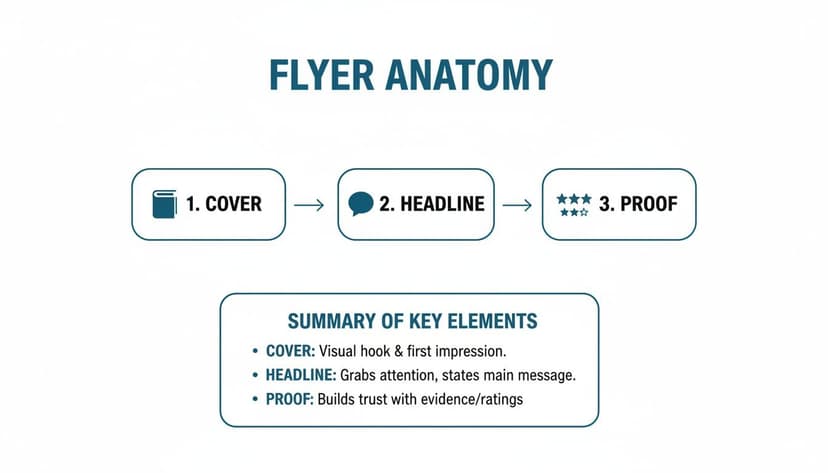
As you can see, it’s all about how the book cover, a killer headline, and some form of proof work together to grab a reader’s attention and not let go.
Here's a quick reference guide to ensure your flyer is technically prepared for both physical and online distribution channels.
Print vs Digital Flyer Specifications
| Specification | Print Flyers | Digital Flyers |
|---|---|---|
| Resolution | 300 DPI (for crisp, clear images) | 72 DPI (for fast loading) |
| Color Mode | CMYK (Cyan, Magenta, Yellow, Black) | RGB (Red, Green, Blue) |
| File Type | PDF (best for preserving layout) | JPG or PNG (for web compatibility) |
These settings ensure your flyer looks fantastic everywhere it’s seen. A high-resolution print won’t look pixelated, and a web-optimized digital version will load quickly without sacrificing too much quality.
Key Takeaway: A time-saving trick is to create one master design file in a tool like Canva. From there, you can download it twice: once as a high-resolution PDF with CMYK colors for the print shop, and a second time as a 72 DPI JPG with RGB colors for social media, email, and your website.
Of course, the colors you choose have a massive impact on how your flyer is received. To get a better handle on how different hues can influence a reader's emotions, check out our deep dive on color psychology for branding. Matching your flyer's color scheme to your cover's dominant tones creates a cohesive, professional look that strengthens your author brand.
How to Write Copy That Hooks Book Club Organizers
The person choosing a book for their club thinks differently than a casual browser on Amazon. They aren't just looking for a good story; they're on a mission to find a book that will spark lively, memorable discussions.
Your flyer's copy needs to speak directly to this specific need. It must go beyond the standard back-cover blurb and prove your book is their perfect next pick. The goal is to frame your story as an experience, not just a product. Think less about summarizing every plot point and more about highlighting the elements that make for a great conversation.
Focus on Discussion-Worthy Themes
Book club organizers are always hunting for books with real depth. Your flyer is the perfect spot to show off the rich themes and complex questions your story explores.
Instead of just laying out the plot, frame it around the conversations it’s guaranteed to start. Does your novel tackle tough moral dilemmas? Does it feature complex characters whose motivations are open for debate? These are the hooks that will grab an organizer's attention.
Try using phrases that signal a great discussion is on the horizon:
- "A story that will have your members debating what they would have done."
- "Explores the grey areas of loyalty, betrayal, and forgiveness."
- "Perfect for fans of complex characters and thought-provoking endings."
This approach reassures them that your book has the substance to fuel a two-hour meeting. A book with a strong, genre-appropriate cover, like those for compelling romance book covers, can visually back up these thematic promises at a glance.
Provide a Plug-and-Play Information Kit
Make the organizer’s job simple. Give them every essential piece of information in one tidy package. Your book club flyer should act as a mini-press kit, containing everything they need to pitch your book to their group. This small step builds massive goodwill.
The easier you make it for an organizer to say "yes," the more likely they are to choose your book. Hand them ready-to-use details so they don't have to go digging for information.
Your flyer needs to present this info in a clean, scannable format.
Must-Have Details for Your Flyer:
- A Compelling Headline: Ask a question or make a bold statement, like "Your Next Unforgettable Book Club Read."
- Discussion-Focused Summary: A tight, 3-4 sentence pitch that emphasizes conflict and themes, not just plot.
- Key Themes: A bulleted list of 3-4 hot topics (e.g., "Friendship vs. Ambition," "The Cost of Secrets").
- Author Bio Highlight: A brief, relevant detail that adds authority, like "Liane Moriarty is the author of nine #1 New York Times bestsellers."
- Purchasing Info: A QR code or a short, clean URL linking directly to your book's sales page.
When you present these elements clearly on your book club flyers, you remove all the friction and position your book as the obvious, hassle-free choice. It shows you understand their role and have written a story tailor-made for a group setting.
How to Get Your Flyer in Front of the Right Readers
You’ve designed a fantastic flyer. Now for the crucial part: getting it into the right hands. An amazing flyer is just a piece of paper until it connects with an actual reader, so a smart distribution strategy is non-negotiable.
Your goal isn't to blanket the town, but to place your flyer where it feels like a helpful discovery, not just another ad. This means thinking strategically about where book club members and organizers already spend their time, both in the real world and online.
Pinpoint High-Impact Physical Locations
Let’s start with the classic "boots on the ground" approach. The best spots are community hubs where your flyer will be a welcome find. A quick, polite request to a manager or librarian is all it takes—many are happy to support authors.
Common Pitfalls to Avoid:
- Leaving Flyers Randomly: Don't just leave a stack on a random counter. This can look like litter.
- Ignoring Local Rules: Always ask permission before posting on a bulletin board or leaving flyers.
- Targeting the Wrong Venues: A flyer in a hardware store is less likely to work than one in a library.
Here are the goldmines:
- Independent Bookstores: This is your prime real estate. Ask if you can tack a flyer onto their community bulletin board. Indie bookstore owners are often champions for local and self-published authors.
- Public Libraries: Libraries are the quintessential reader hangout. They almost always have a designated spot for community notices and event flyers.
- Local Coffee Shops: Zero in on cafes near bookstores or libraries. You'll find people nestled in with a good book, making them a perfect, captive audience.
Master Your Digital Distribution
Now, let's go digital. This is where you can break free of your local geography and connect with book clubs across the internet. The key here is to act like a helpful member of the community, not a walking advertisement.
When you share your flyer—as a high-quality JPG or PDF—frame it as a gift to the group.
Instead of just dropping a link and saying, "Buy my book," try this: "Hi everyone! I created a flyer for my new thriller that includes some discussion themes. Thought it might be useful for any clubs here looking for their next pick."
This simple shift positions you as a valuable resource.
Key Digital Channels to Focus On:
- Niche Facebook Groups: Search for groups dedicated to book clubs or your specific genre (e.g., "Thriller Book Clubs," "Historical Fiction Readers"). Always read the group rules before you post.
- Your Author Newsletter: These are your people! Your subscribers are your warmest audience. Share the flyer with them and ask them to pass it along to any book clubs they know.
- Direct Outreach: Do some research. Find online book club directories and reach out to the organizers directly with a friendly, personalized email. Attaching your pre-packaged flyer makes their job easier.
Thinking outside the box with your distribution can make all the difference. For some creative ideas, this guerrilla marketing guide offers some unconventional tactics. And for more author-specific promotional strategies, check out our in-depth guide on how to promote your books.
Common Questions About Book Club Flyers
Even with a solid plan, a few practical questions always pop up when creating your first batch of book club flyers. Let's tackle the most common hurdles authors face, so you can get your flyers out there with confidence.
Think of this as your cheat sheet for sidestepping common mistakes.
Can I Use a Flyer If My Book Is Ebook-Only?
Absolutely. In fact, you should. Using a physical flyer for a digital book is a fantastic way to bridge the online and offline worlds.
Readers still discover books in physical places like libraries, coffee shops, and indie bookstores. A flyer is your chance to grab their attention in the real world, even if they end up reading on a Kindle.
The key is making the jump from paper to screen effortless. Add a QR code on your flyer linking directly to your book’s sales page on Amazon, Kobo, or your author website. A curious reader can scan it with their phone and have your ebook in their digital library in seconds.
How Much Should I Spend on Printing?
This is where authors often get hung up, but the answer is: start small and be strategic. You don't need to sink a fortune into printing to see a return.
We recommend starting with a small test run of 50-100 flyers. That’s more than enough to stock a few high-traffic local spots, like your neighborhood bookstore or library, without breaking the bank. A small batch of full-color, single-sided flyers on decent paper stock can cost as little as $30 to $50.
Look at it this way: if that small print run leads to just one book club picking up your novel (that’s easily 10-15 copies sold), the flyers have already paid for themselves. It's a low-risk experiment with a high potential payoff.
Once you see what’s getting a response, you can always go back and print more.
What if I'm Not a Designer?
You don't have to be. The single most important visual on your flyer is your book cover. A professional, genre-appropriate cover does 90% of the heavy lifting.
If your cover is strong, the rest is just support. Don't try to get fancy and overcrowd the flyer with clashing colors or a dozen different fonts. Your job is to make the information clear, not to win a design award.
For the flyer layout, just use a clean, simple template from a platform like Canva. Focus on readability. An AI tool can help you generate multiple stunning cover options, giving you a powerful visual anchor before you even start. A killer cover for a romance book, for instance, essentially designs the flyer for you.
A simple, well-organized flyer with an incredible cover will always beat a cluttered, over-designed mess. Let your book shine.
Ready to Create Your Own Book Cover?
Turn your story into a visual masterpiece. Fill in the details below to start generating professional covers instantly.
