How to Write an Author Bio: A Guide for Indie Authors
Learn how to write author bio that engages readers and boosts sales across Amazon, websites, and social media with actionable tips for 2026.
Posted by
 Pablo Yáñez
Related reading
How to Increase Book Sales on Amazon: An Author's Practical Guide
Learn how to increase book sales on Amazon with actionable strategies for metadata, pricing, ads, and cover design to amplify your KDP success.
How to Identify Your Target Audience: A Practical Guide for Indie Authors
Learn how to identify your target audience with our guide for indie authors. Discover market research tactics and how to craft reader personas that sell books.
A Practical Guide to Social Media Marketing for Authors
Struggling with social media marketing for authors? This guide offers real strategies to build your audience, engage readers, and turn followers into fans.
Ready to design your cover?
Use our AI book cover generator to create tailored book cover concepts in minutes.
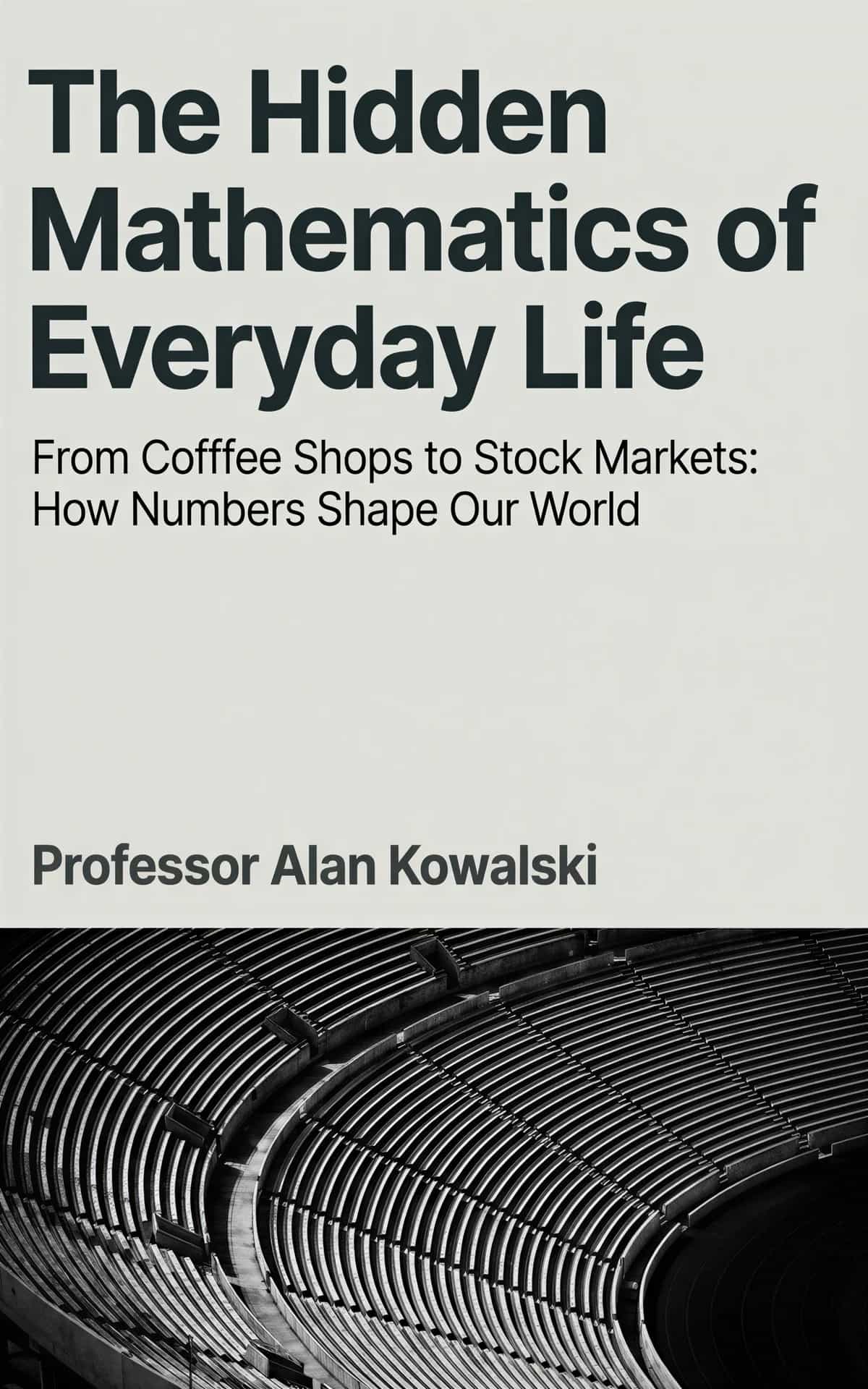
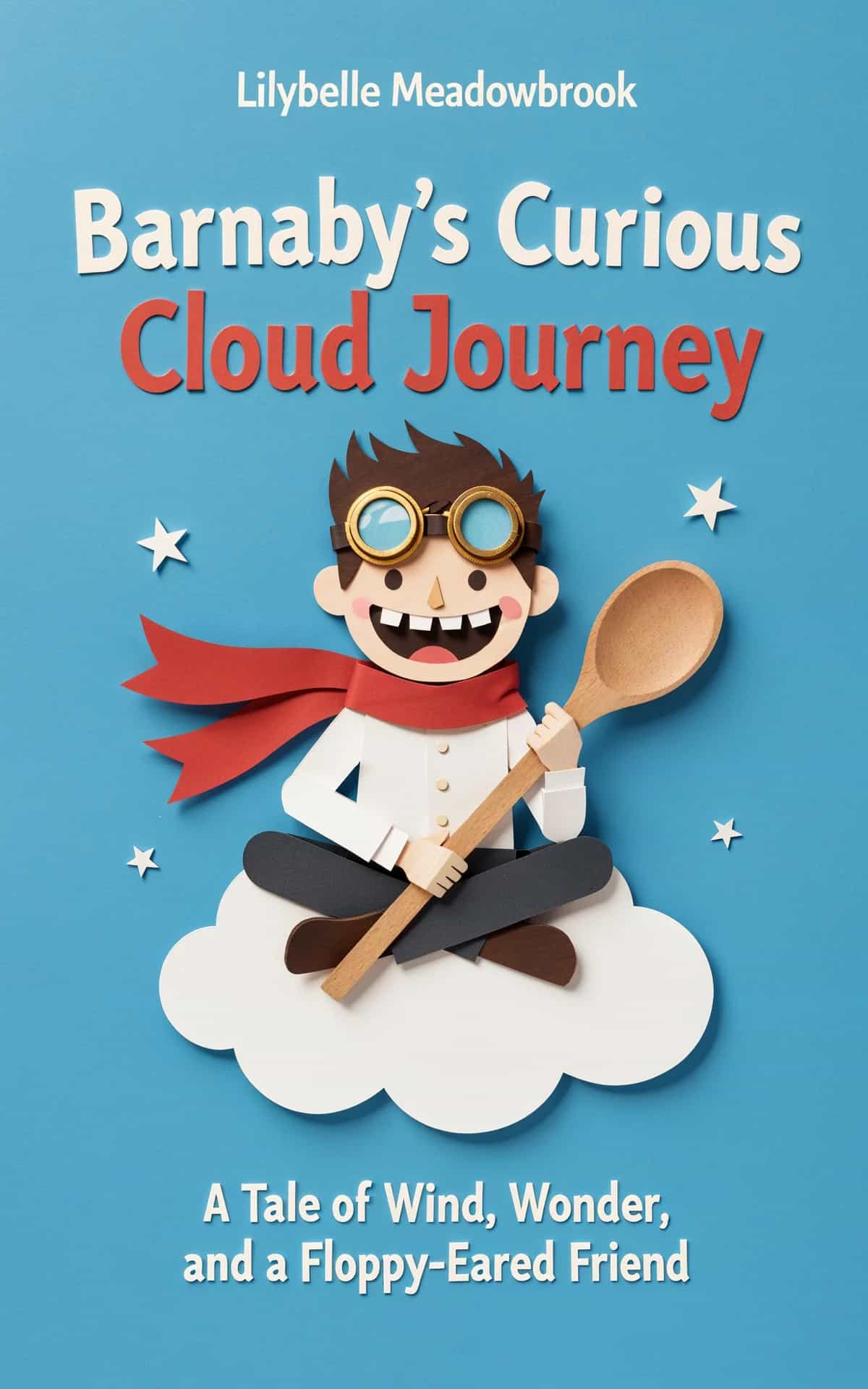
At its core, an author bio is a short, punchy paragraph that introduces who you are, what you write, and why a reader should lose themselves in your stories. It's a blend of your professional credentials, relevant experience, and just enough personality to build trust and spark a connection.
If you are still deciding how to present yourself publicly, use the Pen Name Generator first so your bio and brand are pulling in the same direction.
Your Bio Is More Than Just an Afterthought

After pouring your heart and soul into a 90,000-word manuscript, the last thing you want to do is write about yourself. For many indie authors, the bio feels like a final, tedious chore—a few sentences hastily thrown together to fill that little box on their Amazon KDP page.
This is a huge mistake.
Your author bio is one of the most powerful sales tools you have. It’s the handshake before the conversation, that split-second moment where a potential reader decides if they vibe with you enough to spend their time and money on your book. A weak or generic bio creates a disconnect, but a well-crafted one builds instant credibility and forges a genuine human connection.
The Bridge Between Cover and Content
Think of your book cover and your author bio as a one-two punch. The cover makes a promise. It grabs a reader’s attention and screams, "This is the kind of adventure you're about to have!"
Then, the bio seals the deal. It answers the reader’s unspoken question: "Is this the right person to tell me this story?"
A great bio works on multiple levels:
- It Builds Authority: It tells readers why you are uniquely qualified to write this story, whether that’s through professional credentials, lived experience, or just a deep, nerdy passion for your genre.
- It Creates Connection: A well-placed personal detail makes you relatable. It turns you from a name on a cover into a real person they can root for.
- It Reinforces Your Brand: The tone of your bio needs to match the tone of your books. A witty bio for a comedy writer or a serious, thoughtful one for a thriller author creates a cohesive, professional author brand. To nail this, check out our guide on creating an effective author brand strategy.
Why Indie Authors Must Get This Right
If you’re with a traditional publisher, you’ve probably got a whole marketing team helping shape your bio. But for indie authors publishing on KDP and other platforms, you are the marketing team. Every single element, from your blurb to your bio, directly impacts your sales and your ability to build a loyal following.
A strategically written bio isn't just a summary of your life; it's a carefully constructed piece of marketing copy. Its sole purpose is to convert a curious browser into a committed reader. It's your first and best chance to tell them, "You're in good hands."
It’s time to start treating your bio with the same seriousness you give your cover design or blurb. It’s not just filler text. It’s the foundation of your relationship with your audience. For some fantastic inspiration on making your bio truly pop, explore these powerful ideas for About Me pages. Stop seeing it as a task and start seeing it as the opportunity it is.
Nailing the Core of Your Author Bio
Think of your author bio not just as a paragraph, but as a tiny, powerful piece of marketing real estate. Every single word has a job to do. A great bio doesn't just list facts; it hooks the reader, proves you know your stuff, and tells them exactly what to do next.
Let's break down the essential pieces that turn a simple bio into a reader magnet.
The Hook and Your Authorial Identity
Your first sentence is your digital handshake. It has one job: to instantly tell a potential reader who you are and what kind of stories you write. You need to be direct, clear, and perfectly in tune with your genre.
For example, a thriller writer might kick things off with something like this: "J.A. Vance is a former intelligence analyst and the award-winning author of the high-octane Alex Cain series."
That one sentence screams expertise and action, immediately grabbing the attention of readers who love authentic, fast-paced stories. A debut romance author, on the other hand, could go for a totally different vibe: "Elara Sloane writes swoon-worthy small-town romances where love always finds a way."
This intro is a direct promise to romance readers, signaling the exact emotional payoff they’re searching for. Your goal is to make a reader think, "Yes, this is my kind of author."
Showcasing Achievements Without Bragging
Once you've hooked them, it's time to build credibility. This is where you bring in the heavy hitters: awards, bestseller lists, or relevant professional experience. The trick is to state these achievements as simple facts, not as a brag sheet.
Here are a few ways to pull this off gracefully:
- State it Directly: "Her debut novel, The Crimson Key, was a USA Today Bestseller."
- Integrate It Naturally: "As a seasoned journalist, she brings two decades of investigative experience to her intricate mystery plots."
- Mention Affiliations: "He is a proud member of the Science Fiction and Fantasy Writers of America (SFWA)."
You don't need to list every single thing you've ever accomplished. Just pick the one or two most powerful credentials that prove you can deliver on the promise you made in your opening line.
The First-Person vs. Third-Person Debate
So, should you write "I am an author..." or "She is an author..."? This is one of the first hurdles writers face. While a first-person bio can feel more personal and chatty, the industry standard for professional platforms—KDP, press kits, book jackets—is overwhelmingly third-person.
Writing in the third person creates a professional distance that lets your accomplishments speak for themselves. It sounds less like you’re boasting and more like a factual introduction from a trusted source, which is key for building reader trust.
Key Takeaway: Stick to the third-person perspective for your primary author bio. It’s the standard for a reason—it frames you as a professional and makes your bio easy for media, reviewers, and retailers to use.
Adding a Personal, Relatable Detail
Okay, you've established your professional cred. Now it's time to be human. A single, memorable personal detail can forge a surprisingly powerful connection with readers. The best ones are brief and, if possible, tie back to your author brand.
Check out these examples:
- For a cozy mystery author: "...she lives in a small coastal town with her two mischievous cats, who often serve as inspiration for her furry sidekicks."
- For a historical fiction author: "...when not writing, he can be found exploring dusty archives and historical reenactments."
This little touch makes you memorable. It gives readers something to connect with beyond your books and makes them feel like they know you. Your bio should feel just as thoughtfully crafted as your book blurb to create a complete, compelling package.
The All-Important Call to Action (CTA)
Whatever you do, don't just end your bio with a period. That final sentence is your golden opportunity to guide the reader. A clear, direct call to action is the difference between a casual browser and a loyal fan.
Make your CTA singular and specific. Don't overwhelm them with three different requests.
- To drive sales: "Discover the next book in the series here."
- To build community: "Join her newsletter for exclusive content at [website link]."
- For social engagement: "Follow his writing journey on Instagram @AuthorName."
A sharp bio works best when paired with a professional headshot. Using a tool like a ShortGenius AI photo editor can help you polish your author photo, ensuring the entire package looks professional and leaves a lasting impression.
Adapting Your Bio for Different Platforms
Your author bio isn't a "one and done" piece of writing. Far from it. The bio that works on your Amazon KDP page is completely different from the one on your author website, and trying to use the same one everywhere is a common mistake.
Think about the reader's mindset. On a retail site, they're in "buy mode," ready to make a quick decision. On your website, they're in "discovery mode," looking to connect with the person behind the books. Your bio has to meet them where they are.
This means adjusting the length, tone, and call to action for every platform.
The Retail-Ready Bio for Amazon and KDP
On storefronts like Amazon, Barnes & Noble, or Kobo, your author bio is pure marketing copy. Its one job is to help close the sale.
Here, brevity and authority are everything. A reader is hovering over the "Buy Now" button, and your bio needs to give them that final nudge of confidence. It has to instantly answer the question: "Is this author credible and worth my time?"
A killer retail bio is:
- Concise: Keep it tight, around 50-100 words. Every single word has to justify its existence.
- Authoritative: Lead with your strongest credential. "USA Today Bestselling Author" or "Award-Winning Journalist" right at the top.
- Genre-Focused: Immediately signal that you belong in this genre. If you write thrillers, say so. This reinforces the reader’s choice.
- Sales-Oriented: The call to action (CTA) should encourage another purchase. Something like, "Discover the next book in the series" or "Explore the complete collection" works perfectly.
This version is lean, powerful, and built for one thing: conversion. Save the quirky personal anecdotes for another time.
The Narrative Bio for Your Author Website
Your website is your home turf. This is where you can finally stretch your legs and tell your story. Visitors who land here want to know you—the person, not just the product. This is your chance to turn a casual reader into a dedicated fan.
A website bio can be much longer, often in the 250-500 word range, and should feel more personal. Writing in the first person is a great way to build that connection. Share your "why." What's the passion, the weird obsession, or the life experience that fuels your stories?
While your retail bio is a firm handshake, your website bio is an invitation to sit down for a coffee. It's where you ask readers to join your world and become part of your journey.
Here, you can dive into your background, hobbies, or what inspires you. Naturally, the call to action should reflect this community-building goal. Instead of pushing for a sale, guide them toward a deeper relationship. A CTA like "Join my newsletter for behind-the-scenes stories" is infinitely more effective in this space.
No matter the platform, every great bio is built on three core pillars: a hook to grab attention, proof of your credibility, and a clear call to action.
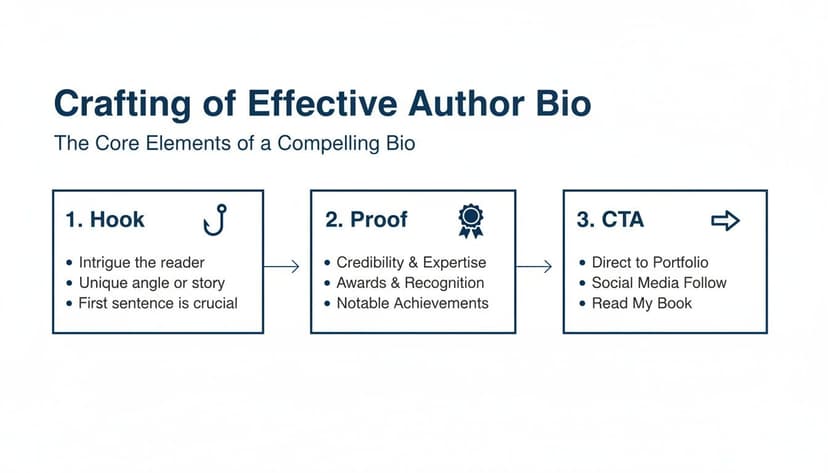
You'll just reconfigure these building blocks depending on where your bio is going to live.
The Short and Punchy Bio for Social Media
Platforms like Instagram, X (formerly Twitter), and Goodreads are all about speed. You're fighting for attention against a tidal wave of content, and character limits are unforgiving. Your bio needs to be a concentrated shot of your author brand.
For these profiles, you’re thinking in terms of a single, memorable sentence or a few key phrases—often under 160 characters.
Pack a punch by including:
- Your Genre: "Thriller author" or "Writer of swoony romance."
- A Key Credential: "NYT Bestseller" or "Award-Winning."
- A Personal Quirk: "Fueled by coffee and conspiracy theories." This adds a human touch.
- A Single, Valuable Link: Use a tool like Linktree or, even better, send them directly to your newsletter signup.
The goal is to be instantly recognizable. Someone should glance at your profile and know exactly who you are and what you write in less than three seconds. This is a small but critical piece of your overall marketing puzzle. If you want more tips on that, check out our guide on how to promote your books effectively.
To make this even clearer, here's a quick cheat sheet comparing how your bio should change across platforms.
Author Bio Variations by Platform
| Platform | Ideal Length (Words) | Tone and Voice | Primary Goal and CTA |
|---|---|---|---|
| Amazon KDP / Retail | 50–100 | Authoritative, professional, third-person | Drive Sales: "Buy the next book in the series." |
| Author Website | 250–500 | Personal, conversational, first-person | Build Community: "Join my newsletter for exclusive content." |
| Social Media | Under 160 characters | Punchy, brand-focused, a hint of personality | Grow Following: "Click the link for updates & freebies!" |
Mastering the art of the author bio means learning how to be a chameleon. By tailoring your message to the platform, you're not just selling more books—you're building a brand and a readership that will stick with you for the long haul.
Speak Your Reader's Language
A generic author bio attracts a generic audience—or worse, no one at all. To really click with readers, your bio has to speak the language of your genre. The tone, the keywords, and the personal tidbits that sell a gritty thriller are worlds apart from what will charm a romance reader.
Think of it as a subtle promise. Your bio, working hand-in-hand with your book cover, is the final nod that tells the reader, "Yes, I get it. I understand the world you want to escape into." It's about building a cohesive brand where the author behind the words feels like the perfect guide for the story they're about to read.
For Fantasy and Science Fiction Authors
SFF readers are here for the worlds. They live for intricate magic systems, sprawling galaxies, and lore that feels a thousand years deep. Your bio needs to position you as a capable and obsessive world-builder.
Focus on details that signal your dedication to the craft:
- Flash Your Expertise: Got a background in history, mythology, or even astrophysics? Mention it. It shows your worlds are built on a solid foundation.
- Show, Don't Just Tell Your Passion: A line like, "She's been drawing maps of imaginary lands since she could hold a crayon," or, "He spends his weekends building starship models," speaks volumes.
- Use the Lingo: Words like "epic," "sprawling," "dystopian," or "high fantasy" are instant signals that they've found one of their own.
An SFF bio should project wonder and meticulous dedication. It assures readers they're in the hands of a true architect of worlds.
For Mystery and Thriller Authors
Fans of mystery and thrillers are hunting for intrigue, tension, and an author they can trust to deliver a plot that’s both clever and satisfying. Your bio needs to project authority with just a hint of darkness.
Lean into details that build credibility and suspense:
- Leverage Relevant Experience: If you’ve worked in law enforcement, forensics, psychology, or journalism, that goes right at the top. It’s an instant credibility booster.
- Share Intriguing Hobbies: Mentioning an interest in true crime podcasts, urban exploration, or cryptography hints at a mind perfectly suited for crafting puzzles.
- Nail the Tone: Keep it serious and direct. A bio for a high-stakes thriller should feel just as taut as the story itself. This is the kind of cohesion that makes a professional thriller book cover so effective—it all feels part of the same promise.
For Romance Authors
Romance readers crave an emotional connection. They're looking for an author who genuinely believes in love, understands chemistry, and can deliver that heart-pounding happily ever after. Your bio should feel like a warm, approachable chat.
Here's how to create that connection:
- Share Your "Why": A brief mention of what draws you to the genre, like "A lifelong believer in second chances..." creates an immediate bond.
- Drop in Relatable Details: Love cozy cafes, binge-watching rom-coms, or have your own real-life love story? Sharing these details makes you instantly feel like a friend.
- Promise the Payoff: Use words that speak directly to what they're looking for: "swoon-worthy," "heartwarming," and, of course, "happily ever after."
Your romance bio should be a warm hug in text form, promising the emotional escape the reader is craving.
For Non-Fiction Authors
When it comes to non-fiction, credibility is the only currency that matters. Readers are buying your expertise, and your bio is the proof. There's zero room for fluff here; every single sentence must reinforce why you are the authority on your subject.
Your non-fiction bio isn't a story; it's a resume. Its goal is to eliminate all doubt and convince the reader that your book contains essential, trustworthy information they need.
Your bio has to be a laser-focused summary of your qualifications. We're talking degrees, professional titles, years of experience, major publications, or speaking engagements. Author bios aren't just filler—they're a critical credibility bridge, appearing in 95% of published works, from academic journals to novels. And considering that romance (52%) and fantasy (33%) are dominant genres for indie authors, a bio that's perfectly tuned to what those readers expect can make a huge difference in sales. You can find more insights about the impact of author bios on Two Writing Teachers.
By aligning your bio with genre conventions, you create a seamless experience. The reader sees the cover, reads the blurb, checks the bio, and every piece tells them the same thing: this book is for you. That’s how you write an author bio that doesn't just inform—it sells.
Common Bio Mistakes That Can Hurt Your Sales
It’s surprisingly easy to write an author bio that looks fine on the surface but is actually sabotaging your book sales. A few simple, avoidable slip-ups can make you seem unprofessional, uninteresting, or just plain out of touch with your audience.
Think of this section as your final self-editing checklist. It’s designed to help you catch these engagement-killers before they cost you a reader. A great bio feels effortless, but a weak one is memorable for all the wrong reasons. Let's make sure yours is working for you, not against you.
The Vague and Generic Bio
This is, without a doubt, the most common mistake. It’s the bio packed with clichés and generic statements that could apply to a thousand other authors. At best, it's forgettable. At worst, it screams "amateur."
You’ve probably seen this a million times:
Jane Doe is a passionate writer who loves coffee and her dog, Buster. She has always dreamed of writing novels and is excited to share her first book with the world.
This tells the reader nothing. "Passionate writer" is a given—you wrote a book! Instead of using fluff, replace those vague lines with concrete, impactful details about your unique expertise or your personal connection to the stories you tell.
Oversharing Irrelevant Details
On the other end of the spectrum is the bio that shares way too much. Readers don't need to know about your messy divorce, your kids' full names, or your strong political opinions—unless those details are directly relevant to your books (like in a memoir or political non-fiction).
Oversharing can make readers uncomfortable and completely dilute your professional image. Every single detail in your bio should serve a clear purpose: to build credibility or create a strategic, on-brand connection with your ideal reader. If it doesn't do one of those two things, cut it.
Forgetting the Call to Action
Ending your author bio without a call to action (CTA) is like delivering a killer sales pitch and then just walking away. You’ve hooked the reader, built your credibility, and made a connection—now you have to tell them what to do next.
A bio that just trails off with "...and lives in Ohio" is a massive missed opportunity. That last sentence is your chance to guide the reader deeper into your world. Always include a single, clear instruction.
- "Join her newsletter for exclusive bonus content at..."
- "Discover the next book in the Alex Drake series here..."
- "Follow his writing journey on Instagram @AuthorHandle for behind-the-scenes updates."
Without a CTA, you leave a potential fan hanging, unsure of how to find more of your work.
Writing a Wall of Text
Never underestimate the power of formatting. A bio that’s a dense, intimidating block of text will simply get skipped. Readers on retail sites are scanning, not deep-reading.
Keep it tight. Four to six sentences is the sweet spot. And make sure to break it up visually. Learn more about optimizing author bios from Automateed.
Pro Tip: Your bio is a piece of marketing copy, not a chapter from your autobiography. Use short paragraphs and clear language to make your key selling points impossible to miss.
By steering clear of these common blunders, you can transform your bio from a simple afterthought into a hardworking sales tool. Take the time to self-edit ruthlessly; your future readers (and your sales numbers) will thank you.
Lingering Questions About Author Bios
So, you’ve hammered out a bio that feels pretty solid. But a few little questions might still be nagging at you. Let's clear those up so you can finalize your bio with total confidence and get back to what you do best: writing.
Should I Hire Someone to Write My Bio?
Honestly, even if you plan to hire someone eventually, you should always write the first draft yourself. No one can capture your passion and your "why" quite like you can. That authentic core is what readers connect with, and it's tough for a copywriter to invent from scratch.
Think of a professional as a polisher, not a creator. They can be invaluable for tightening up your sentences, sharpening your marketing angle, and making sure every word works hard. But the story itself? That has to come from you.
How Often Should I Update My Bio?
Your author bio isn't a "set it and forget it" kind of thing. It's a living document. You should review it at least once a year to make sure it still feels fresh and accurate.
More importantly, you need to update it the moment something big happens. Drop everything and add that new achievement. This includes things like:
- Publishing a new book or kicking off a new series.
- Winning a literary award (even a small, respected one!).
- Hitting a major bestseller list like the USA Today or New York Times.
- Getting a shout-out from a major media outlet or a glowing review from an author you admire.
Keeping your bio current shows readers, agents, and publishers that you're active and engaged in your career. It builds a tremendous amount of trust.
What’s the Best Call to Action for a Bio?
This is a great question, and the answer is: it completely depends on where the bio is. There's no single "best" CTA. The key is to have one clear goal for each platform.
Here are a few scenarios to get you thinking:
- On your KDP book page: The goal is to sell the next book. Your CTA should be something like, "Discover the next book in the series here: [Link]."
- On your author website: You want to capture that reader for the long term. A perfect CTA is, "Join my newsletter for exclusive stories at [YourWebsite.com]."
- On social media: The goal is engagement on that platform. Try, "Follow my author journey on Instagram @[YourHandle]."
The trick is to make the reader's next step completely obvious and frictionless. If you give them too many choices—follow me, buy my book, join my list—they'll often choose none. Pick a lane.
Can I Use Humor in My Author Bio?
Absolutely! But—and this is a big but—only if it’s a perfect match for your author brand and genre.
Humor is a fantastic way to connect with readers if you write comedies, lighthearted romance, or cozy mysteries. It sets the right expectation and draws in the right audience.
On the other hand, a jokey bio would feel jarring and out of place if you write gritty thriller book covers or deeply researched historical non-fiction. It would create a brand mismatch that confuses readers.
Before you drop in that clever one-liner, ask yourself a simple question: Does this reinforce the promise I'm making to my readers? If it does, go for it. If not, it's smarter to play it straight. Your bio is a crucial piece of your brand, just like the cover art you might test with an AI tool to find the perfect vibe.
Relevant Free Tools
Keep going with the right generator
These tools match the topic of this article and give readers a direct next step.
Ready to Create Your Own Book Cover?
Turn your story into a visual masterpiece. Fill in the details below to start generating professional covers instantly.
