How to Build an Author Website: A Strategic Guide
Discover what makes a great author website example. We break down 7 top sites to show you how to build a platform that sells books and engages readers.
Posted by
 Pablo Yáñez
Related reading
How to Increase Book Sales on Amazon: An Author's Practical Guide
Learn how to increase book sales on Amazon with actionable strategies for metadata, pricing, ads, and cover design to amplify your KDP success.
How to Identify Your Target Audience: A Practical Guide for Indie Authors
Learn how to identify your target audience with our guide for indie authors. Discover market research tactics and how to craft reader personas that sell books.
A Practical Guide to Social Media Marketing for Authors
Struggling with social media marketing for authors? This guide offers real strategies to build your audience, engage readers, and turn followers into fans.
Ready to design your cover?
Use our AI book cover generator to create tailored book cover concepts in minutes.

Your author website is more than just a digital business card; it's the central hub of your author business. While social media platforms have shifting algorithms and retailer pages are restrictive, your own site gives you complete control over your brand, your connection with readers, and your sales funnels.
A well-designed site builds trust, captures lifelong fans for your mailing list, and provides a direct path for readers to buy your books. It's also the cornerstone for learning how to build your personal brand, which is essential for standing out as an indie author. However, knowing what elements to include and how to structure your site can feel overwhelming.
This article moves beyond generic advice by providing a strategic breakdown of what works and why. We will analyze what makes a successful author website for different goals, from building a massive email list like James Clear to managing a complex series universe like Brandon Sanderson. You will see detailed screenshots and get direct links to explore each site yourself.
If your site is part of a broader rebrand, it helps to settle on your public author identity first with the Pen Name Generator.
Our goal is to give you actionable insights and replicable strategies. We'll examine specific tactics behind:
- Homepage Design: How to make a powerful first impression.
- Author Bios: Crafting a compelling and relatable persona.
- Book Pages: Designing effective layouts that drive sales.
- Mailing List Funnels: Turning casual visitors into dedicated fans.
Instead of just showing you a gallery of sites, we will deconstruct what makes each one a powerful marketing machine, so you can build one that actively grows your career.
1. James Clear
James Clear’s website is a masterclass in conversion-focused design, making it an exceptional model for non-fiction writers who want to build an ecosystem around a single, powerful idea. The entire site is engineered to guide visitors toward three key actions: buying his book Atomic Habits, joining his "3-2-1" newsletter, or engaging with his evergreen articles. This clear, no-frills approach makes it a powerful model for authors whose brand is built on thought leadership and authority.
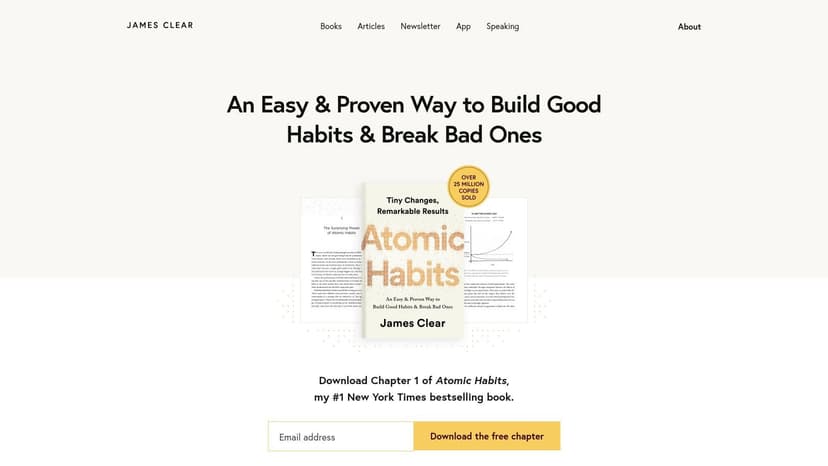
The user experience is fast, clean, and direct. Generous whitespace, a simple color palette, and consistent typography ensure that the content is easy to read and digest. There are no distracting pop-ups or complex animations; every element serves a purpose. This minimalist design puts the focus squarely on Clear's ideas and the value he provides.
Strategic Breakdown & Key Takeaways
The site's brilliance lies in its simplicity and strategic funnel. It anticipates what a visitor wants and provides a direct path to it.
- Homepage Funnel: The first thing you see is a bold headline stating his core value proposition, followed immediately by a newsletter signup form. He offers high-value lead magnets like his "Habits Guide" to make signing up an easy decision. This prioritizes list-building above all else, which is a key strategy for long-term author success.
- Authority & Trust Signals: Clear prominently displays logos of major media outlets where he's been featured (e.g., New York Times, CBS). This social proof, combined with his simple yet professional bio, builds credibility instantly. Your own bio can be a powerful tool; discover more on how to write an effective author bio.
- Content as a Magnet: The "Articles" section is a hub of evergreen content that drives significant organic traffic. Each article is deeply researched and provides actionable advice, reinforcing his expertise. This content acts as the top of the funnel, drawing readers in who are searching for solutions that Atomic Habits ultimately provides.
Key Insight: Clear's website isn't just a brochure for his book; it's the central hub of his entire business. The site transforms one-time book buyers into long-term subscribers and fans by consistently delivering value through free content.
What Authors Can Replicate
- Prioritize Your Newsletter: Place a clear, compelling call-to-action for your mailing list above the fold on your homepage. Offer a valuable freebie, like a short story, a checklist, or an exclusive chapter.
- Build a Content Hub: Create a blog or articles section focused on themes related to your books. This is a powerful SEO strategy that attracts readers who are already interested in your niche.
- Streamline Your Book Pages: James Clear’s book page is simple. It includes the cover, a short, impactful description, and clear links to buy from multiple retailers. Remove any friction that might stop a potential reader from making a purchase.
Website: https://jamesclear.com/
2. Brandon Sanderson
Brandon Sanderson’s website is an essential guide for prolific writers, especially within the science fiction and fantasy genres. It masterfully organizes a complex universe of interconnected series and standalones, serving as a central hub for both new readers and dedicated fans. The site is built not just to sell books, but to foster a community and provide unparalleled transparency into the author’s creative process.
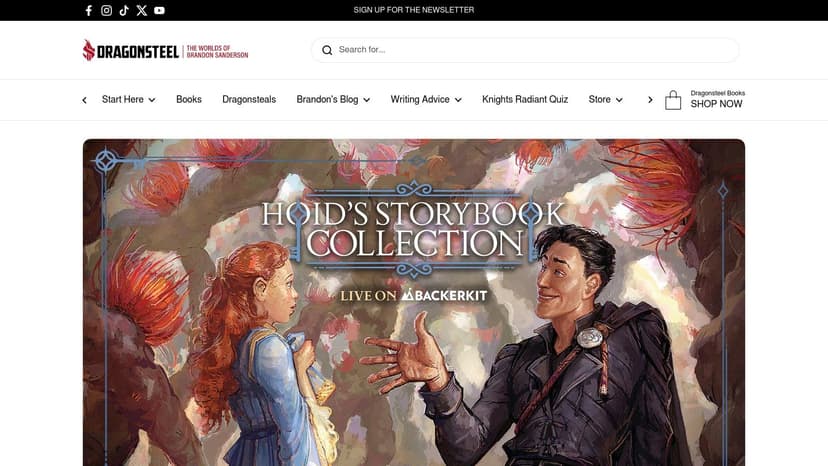
The user experience is dense with information, yet thoughtfully structured to guide visitors. Newcomers are given clear starting points for different series, while long-time followers can dive straight into detailed lore or check the status of upcoming projects. This balance between accessibility and depth makes it a powerful model for authors managing a large backlist and a highly engaged readership.
Strategic Breakdown & Key Takeaways
The site's effectiveness comes from its robust organization and its function as a community touchstone. It acknowledges the complexity of Sanderson's "Cosmere" universe and provides the tools to navigate it.
- Canon & Series Organization: The homepage immediately presents clear pathways into his various series. The "Books & Art" section is meticulously organized, allowing readers to filter by series, world, or recommended reading order. This prevents reader confusion and provides a clear onboarding ramp for a massive catalog.
- Radical Transparency: A unique feature is the set of progress bars on the homepage, showing the real-time status of his current writing projects. This, combined with his frequent "State of the Sanderson" blog posts, creates a deep sense of connection and loyalty. Fans feel like they are part of the journey, which builds immense anticipation for new releases.
- Community Integration: While hosting its own news and updates, the site actively links out to fan-run resources like the Coppermind Wiki and the 17th Shard forum. This acknowledges and empowers the fan community, turning the author's website into the central directory for the entire fandom ecosystem, not just a one-way marketing channel.
Key Insight: Sanderson's website treats his readership as an intelligent, engaged community. By providing direct access to his process and empowering fan-created resources, he builds a level of loyalty and investment that goes far beyond just selling the next book.
What Authors Can Replicate
- Create Clear Reading Pathways: If you have multiple books or series, create a dedicated "Where to Start" page. Guide new readers with a simple flowchart or descriptions of each series' tone and entry point.
- Share Your Progress: You don’t need a live-updating progress bar, but regular blog posts or a simple "What I'm Working On" section can build anticipation. Let your readers feel like insiders.
- Organize Your Book Pages: For each book, include the cover, a compelling description, reading order information (if part of a series), and links to all major retailers. Make it easy for readers to find what they need and make a purchase.
Website: https://www.brandonsanderson.com/
3. Rick Riordan
Rick Riordan’s website is a prime template for writers with extensive series or franchises, especially in the middle-grade and YA space. The site is a masterfully organized hub designed to welcome new readers and serve a dedicated fanbase. It recognizes that navigating a universe with dozens of books can be daunting and solves this problem with clear signposting and dedicated reading guides, making it an excellent model for authors managing a large backlist.
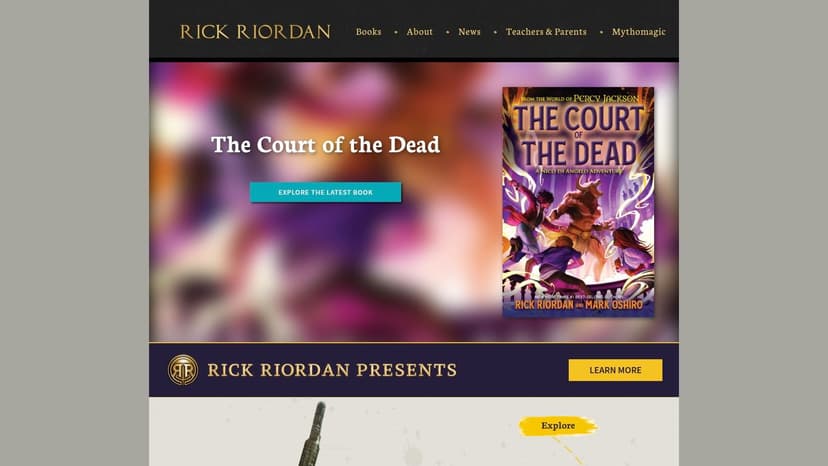
The user experience feels like a friendly, digital library dedicated to his worlds. The design is polished and accessible, balancing fun, mythology-themed visuals with a clean information architecture. Instead of just selling books, the site focuses on guiding the user experience, whether that’s a parent trying to find the first Percy Jackson book or a long-time fan looking for news about the latest TV show adaptation.
Strategic Breakdown & Key Takeaways
The site's power comes from its reader-centric approach, which anticipates and answers user questions before they even have to ask.
- Guided Reader Onboarding: A prominent "New to this world?" section acts as a perfect entry point. It directs visitors to a "Reading Order For My Books" page, which is essential for a complex series. This reduces confusion and helps new readers invest in the franchise without feeling overwhelmed.
- Franchise Ecosystem Hub: Riordan's site doesn't exist in a vacuum. It links out to related properties like the "Read Riordan" content site and Disney+ pages for the TV show. This positions his author website as the central trunk from which all other branches of the franchise grow, maintaining his authority.
- Consistent Fan Engagement: The "News" section is frequently updated with blog posts about book releases, tour dates, and behind-the-scenes updates on adaptations. This regular content stream gives fans a reason to return, keeping the community active and engaged between major launches. An effective author bio can also boost engagement by connecting with readers on a personal level.
Key Insight: For authors with sprawling worlds, the website's primary job shifts from a simple sales page to an essential navigation tool. Riordan's site excels by prioritizing user guidance and franchise cohesion over an aggressive, immediate sales pitch.
What Authors Can Replicate
- Create a "Start Here" Page: If you have multiple books or a series, create a dedicated page that explains the best reading order. This small effort drastically improves the new reader experience.
- Centralize Your Universe: Use your website as the main hub for everything related to your brand. Link to your social media, related projects, and fan communities to create a cohesive ecosystem.
- Build Series-Specific Pages: Don't just list your books. Create dedicated pages or sections for each series that include covers, short blurbs, and reading order. This helps readers find exactly what they're looking for. For instance, an author can create a section dedicated to their romance book covers to showcase the art and theme of each series.
Website: https://rickriordan.com/
4. Roxane Gay
Roxane Gay’s website serves as a powerful model for the multihyphenate writer whose career extends far beyond a single book series. It’s a masterfully organized portfolio that showcases her work as an author, editor, speaker, and cultural critic. Instead of a hard-sell funnel, the site presents a clear, professional overview of her extensive body of work, making it an excellent resource for authors who are building a brand based on their voice and broad expertise.
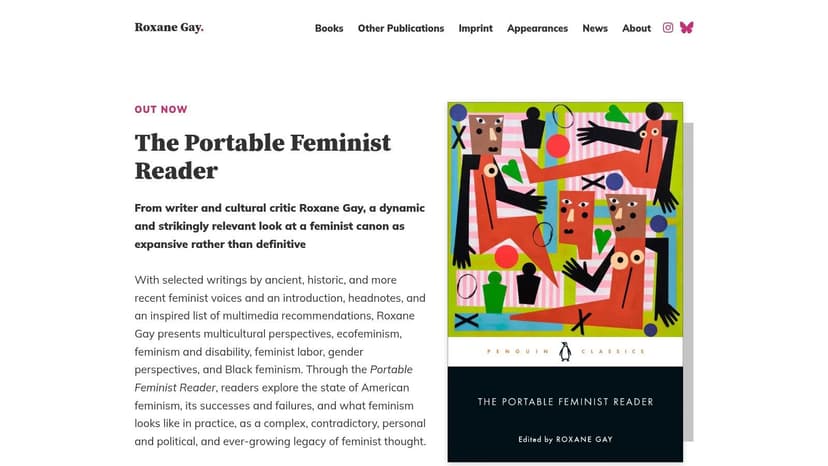
The user experience is direct and uncluttered, with an editorial feel that matches her literary brand. A simple, text-focused design with a clean navigation menu allows visitors to easily explore her various projects, from bestselling books to columns in major publications. The design communicates authority and accessibility, inviting engagement from readers, journalists, and event organizers alike.
Strategic Breakdown & Key Takeaways
The site’s effectiveness comes from its function as a centralized, professional hub that serves multiple audiences at once. It’s designed to be a press-ready resource as much as a reader-facing one.
- Portfolio Approach: The navigation is segmented by activity: "Books," "Writing," "Events," and "About." This allows visitors to self-select their journey. A media professional can quickly find press contact info, while a new reader can browse her book catalog. This is a smart strategy for authors with diverse income streams.
- Press and Media Readiness: Gay’s site includes clear contact information for literary, film/TV, and speaking agents. This removes friction for industry professionals looking to connect, a critical feature for authors who rely on speaking gigs, media appearances, or rights deals.
- Unified Author Brand: Even with a wide range of projects, the website maintains a consistent tone and aesthetic. This cohesion reinforces her author brand, ensuring that whether someone discovers her through a podcast, an essay, or a book, they land in a space that feels familiar and authoritative.
Key Insight: Roxane Gay’s website is not just a sales tool; it's a professional CV and a media kit rolled into one. It demonstrates that an author's platform can be a sophisticated tool for managing a multifaceted career, not just for selling the latest release.
What Authors Can Replicate
- Organize by Activity, Not Just Books: If you write, speak, consult, or teach, create dedicated sections for each. This shows your range and provides clear pathways for different types of visitors.
- Create a "Press" or "Contact" Page: Make it easy for media, event organizers, and other professionals to get in touch. Include email addresses for your agent, publicist, or a dedicated contact form.
- Centralize Your Published Work: Don't just list your books. Create a section for your guest posts, articles, or short stories. This builds your credibility and gives readers more ways to engage with your writing.
Website: https://roxanegay.com/
5. Colleen Hoover
Colleen Hoover’s website functions less like a traditional author bio site and more like a direct-to-consumer (D2C) brand storefront. It is a fantastic template for prolific writers with a large backlist and dedicated fanbase, demonstrating how to merge content, community, and commerce. The site is built to serve her established audience by providing a central hub for books, exclusive merchandise, and news about film or TV adaptations.
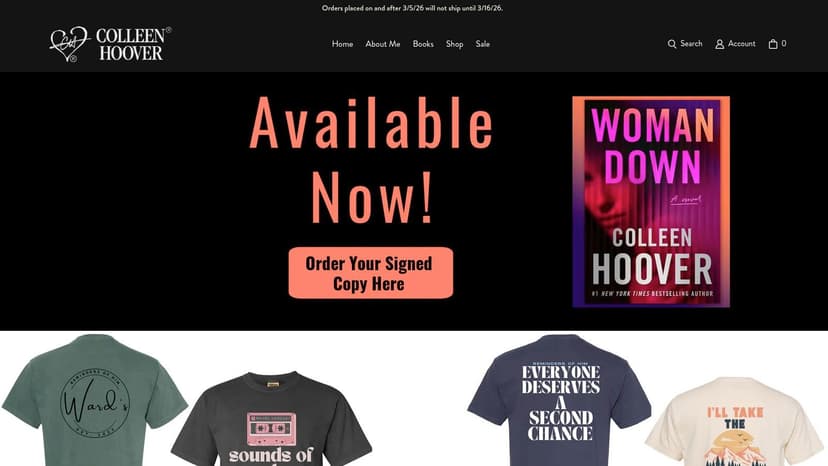
The user experience is immediately retail-oriented. Using a clean, grid-based layout reminiscent of an e-commerce store, the design prioritizes product discovery. Fans can easily browse her extensive catalog, find signed editions, and purchase branded merchandise like apparel and accessories. This commerce-first approach turns the author's domain into a revenue-generating asset beyond just book sales royalties.
Strategic Breakdown & Key Takeaways
The site's effectiveness comes from its clear understanding of its target visitor: an existing fan. Every element is designed to deepen that fan relationship by offering them more ways to connect with the brand.
- Storefront Layout: The homepage immediately presents books as products. This visual, shoppable format is perfect for an author with a deep backlist, allowing readers to quickly find their next read or discover a new series. It encourages browsing and multiple purchases in a single session.
- Merchandise Integration: By selling merchandise directly, Hoover extends her brand beyond the page. This creates another income stream and gives superfans a way to show their loyalty. It’s a powerful model for authors with strong world-building or iconic quotes that can be translated into physical products.
- Cross-Media Capitalization: The site prominently features news about film and streaming adaptations. This keeps fans engaged with the entire intellectual property ecosystem and uses the hype from adaptations to drive interest back to the books and merchandise. This is a critical lesson in how to promote your books by using momentum from other media.
Key Insight: Hoover's website treats her author brand as a complete consumer-facing business. It caters directly to her most loyal readers, offering them exclusive products and information that they can't get anywhere else, which strengthens community and generates direct revenue.
What Authors Can Replicate
- Create a "Shop" Section: Even if you only have a few books, present them in a clean, grid-based "store" format. Use high-quality cover images and provide clear links to multiple retailers or a direct purchase option.
- Consider Simple Merch: Start small with merchandise using print-on-demand services. You can offer T-shirts, mugs, or bookmarks featuring a memorable quote or character name. This adds a new dimension to your author brand without requiring upfront inventory costs.
- Centralize Your News: Create a dedicated "News" or "Updates" page. Use it to announce new releases, share links to interviews, and post updates about any related projects, like audiobooks or special editions. This makes your site the definitive source of information for your fans.
Website: https://www.colleenhoover.com/
6. N. K. Jemisin
N. K. Jemisin’s website is an excellent model for prolific writers, especially in genres like science fiction and fantasy, who need to manage an extensive backlist. The site serves as a clear, professional hub that balances her impressive catalog of award-winning works with essential resources for media and event organizers. It's designed for functionality and clarity, making it easy for new readers to navigate her interconnected series and for industry professionals to find what they need without friction.
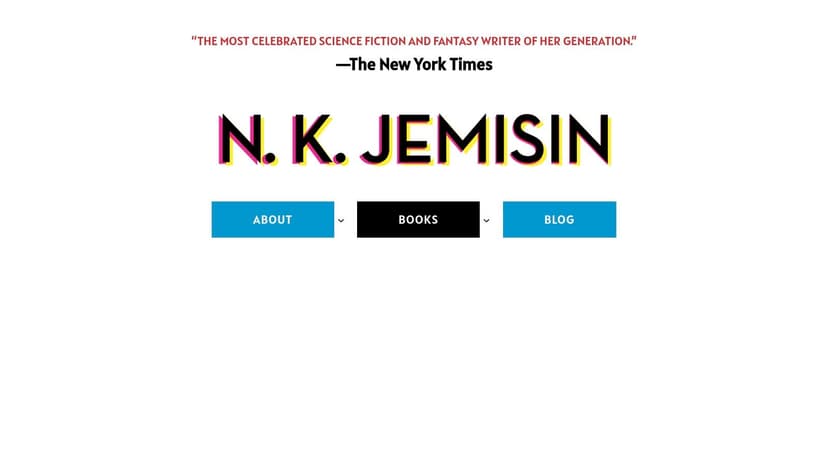
The user experience is straightforward and text-focused, prioritizing information architecture over flashy visuals. Her brand as a celebrated and influential author is communicated through the sheer weight of her accomplishments, which are presented neatly rather than with loud graphics. This makes the site a strong model for established authors whose work and reputation speak for themselves.
Strategic Breakdown & Key Takeaways
Jemisin's site succeeds by serving two distinct audiences, readers and media, with equal efficiency. Its structure is a lesson in how to organize a large body of work without overwhelming visitors.
- Catalog as a Welcome Mat: The "Bibliography" section is more than a list; it’s a guided tour. Books are organized by series and universe, with publication dates and major awards listed for each. This helps new readers decide where to start, a common challenge with authors who have deep backlists.
- Media-Ready Professionalism: A standout feature is the "Press Kit" page. It provides a downloadable PDF containing a formal bio, a Q&A, and high-resolution author photos. This is a brilliant, time-saving tool that signals professionalism and makes it simple for journalists, bloggers, and event coordinators to feature her work accurately.
- Clear Contact Pathways: The site offers distinct contact points for different inquiries, such as general messages, publicity, and speaking engagements. This segmentation ensures that requests go to the right people, reducing administrative work for the author and their team. For authors managing multiple incoming requests, this is a key organizational tactic.
Key Insight: A well-organized author site can function as a virtual press office and reader's guide. By anticipating the needs of media professionals and new fans, Jemisin's website streamlines communication and promotes discoverability.
What Authors Can Replicate
- Organize Your Backlist Intelligently: If you have multiple books or series, create a bibliography page that groups them logically. Add context like series order, genre (like a page for your science fiction book covers), or reading recommendations to guide visitors.
- Create a Simple Press Kit: Compile a one-page document with your bio, a high-quality headshot, and key book details. Make it easily downloadable from your "About" or "Contact" page to assist anyone looking to write about you.
- Segment Your Contact Information: Instead of one generic contact form, provide specific email addresses or forms for different types of inquiries (e.g., media, rights, fan mail). This helps manage your inbox and project a more professional image.
Website: https://nkjemisin.com/
7. Neil Gaiman
Neil Gaiman's website serves as a rich, content-filled hub that feels less like a marketing tool and more like a personal archive and community space. It's a fantastic model for established writers with a large backlist and a dedicated fanbase. The site prioritizes ongoing engagement through personal journal entries, news updates, and extensive resources, making it a valuable resource for authors who want to cultivate a long-term relationship with their readers.
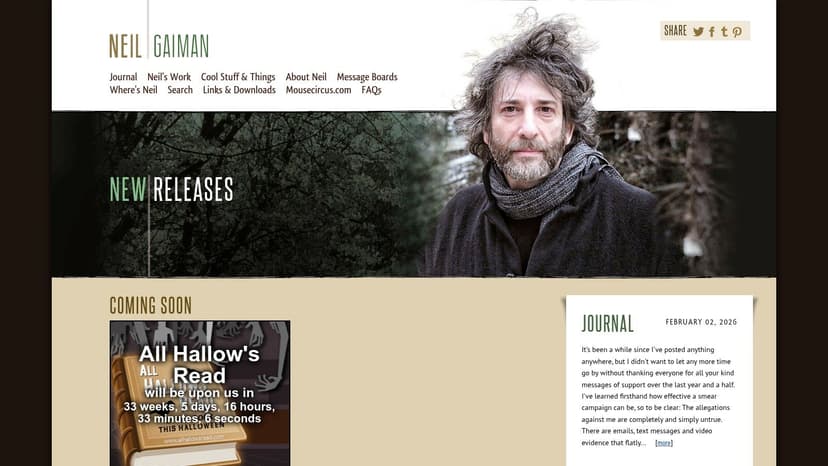
The design has a legacy feel, reminiscent of early internet forums and blogs, which reinforces its authenticity. While the information architecture can feel dense compared to modern minimalist sites, its strength lies in this very depth. The user experience is one of discovery; visitors can spend hours exploring decades of content, from obscure Q&As to detailed posts about his creative process.
Strategic Breakdown & Key Takeaways
The site's power comes from its genuine, personality-driven approach. It acts as the definitive source for all things Gaiman, curated directly by the author and his team.
- Content as a Living Archive: The "Journal" (or blog) is the heart of the site. Gaiman has been posting for years, creating an enormous repository of content that offers immense value to fans. This consistent, personal communication humanizes his brand and keeps readers coming back long after they've finished a book.
- Comprehensive Resource Hub: The "FAQ" section is incredibly detailed, answering questions from aspiring writers, students, and curious readers. By creating such a thorough resource, the site becomes a go-to destination, increasing its authority and organic traffic. This is a brilliant way to manage reader expectations and reduce repetitive inquiries.
- Centralized Catalog of Works: Gaiman’s site masterfully organizes his vast and varied body of work, from novels and comics to TV and film adaptations. Each project gets its own space, complete with synopses, background information, and purchase links. This turns the website into a complete discography, encouraging readers to explore works they may have missed.
Key Insight: Gaiman's website demonstrates that an author's online presence can be a destination in itself. By offering a deep well of personal, archival, and community-focused content, the site fosters a powerful sense of connection that transactional websites can't replicate.
What Authors Can Replicate
- Keep a Consistent Journal: Start a blog and commit to posting regularly, even if it's just short updates. Share behind-the-scenes thoughts, answer reader questions, or discuss topics that inspire you. This builds a loyal following.
- Create a "Start Here" Page or FAQ: Organize your most important information in one accessible place. Include a short bio, links to your most popular books, and answers to common questions. This helps new visitors navigate your world.
- Showcase Your Entire Body of Work: Don’t just promote your latest release. Create a clean, organized "Books" or "Works" page that lists everything you've written. This is especially important for authors working in multiple genres or formats.
Website: https://neilgaiman.com/
How to Choose an Author Website Strategy
| Author Strategy | Implementation Complexity | Maintenance | Expected Outcomes | Best For Indie Authors Who... | Key Advantages |
|---|---|---|---|---|---|
| James Clear | Low–Moderate | Low | Strong list growth & conversions | ...are non‑fiction/single‑title authors focused on subscriptions. | Conversion‑optimized, fast, clear reader journey |
| Brandon Sanderson | High | High | Deep fan engagement & retention | ...are prolific SFF authors with complex canons. | Robust canon organization, transparent WIP updates |
| Rick Riordan | Moderate | Moderate | Repeat visits from young readers | ...write for middle‑grade/YA and want to engage parents. | Clear reading order, family‑friendly guidance |
| Roxane Gay | Low–Moderate | Low | Industry visibility and credibility | ...are literary multihyphenates, speakers, and journalists. | Press‑ready, strong editorial tone, showcases range |
| Colleen Hoover | Moderate | High | Direct sales and merch revenue | ...want to sell editions, merch, or leverage adaptations. | Strong retail orientation, fan‑focused commerce |
| N. K. Jemisin | Low–Moderate | Moderate | Improved discoverability & media requests | ...are SFF authors needing media‑ready backlists. | Media resources, awards display, clear cataloging |
| Neil Gaiman | High | High | Sustained engagement & archival value | ...are long‑career authors prioritizing personality & archives. | Rich archives, personable voice, extensive resources |
Your Blueprint for a High-Performing Author Website
We've explored a range of successful author websites, from James Clear’s minimalist conversion machine to Brandon Sanderson’s sprawling fan hub. Each one offers a powerful lesson: an effective author website is not a digital brochure; it's a strategic tool designed with a clear purpose. Your goal is to move beyond simply having a website and build a platform that actively works for your author business 24/7.
The common thread connecting every strong author website is a relentless focus on the user's journey. They anticipate what a visitor needs and provide a clear, frictionless path to get there. Whether it's signing up for a newsletter, finding the next book in a series, or accessing media assets, the design guides the user's hand. This clarity is the foundation upon which all other features are built.
Synthesizing the Strategies: Your Action Plan
To turn these insights into a functional plan, start by defining your website’s primary job. You cannot optimize for everything at once.
- If your goal is list building (like James Clear): Your primary focus should be on a high-converting homepage. This means a prominent, above-the-fold signup form with a compelling lead magnet. Every other page should reinforce this call to action.
- If your goal is managing a large backlist (like Brandon Sanderson or Colleen Hoover): Prioritize intuitive navigation and a well-organized book catalog. Use clear series pages, "read next" suggestions, and filters to help readers find exactly what they're looking for without getting overwhelmed.
- If your goal is establishing authority and a media presence (like Roxane Gay): Your site needs a professional 'About' page, an easy-to-find 'Contact' or 'Press' page with clear instructions, and a section for speaking engagements or media appearances. The design should communicate credibility and expertise.
Your visual brand, especially your book covers, must be consistent across your site and retailer pages. For genres with strong visual conventions, like sci-fi, this is critical. Our overview of science fiction book covers can help you align your branding. Using a tool to create and test different cover concepts can give you a clear vision of how your brand will look on your homepage, helping you create a unified aesthetic from day one.
Choosing Your Tools and Getting Started
Building your site can feel like a major project, but modern tools have made it more accessible than ever. Your choice depends on your technical comfort, budget, and long-term goals.
- All-in-One Website Builders (Wix, Squarespace): These are excellent for beginners. They offer drag-and-drop interfaces, pre-made templates, and integrated hosting. You can get a professional-looking site live quickly without touching any code.
- WordPress: This platform offers the most flexibility and control, which is why many established authors use it. It has a steeper learning curve but provides endless customization through themes and plugins. For authors who prefer a hands-on approach without the technical hurdles, you can effectively design your author website without coding using powerful page builder plugins that simplify the process.
Regardless of the tool you choose, the principles remain the same. Start small. Launch with a simple, effective site that has a homepage, an about page, a books page, and a contact page. You can always add more complexity later as your career grows.
The examples in this article are not just for admiration; they are your blueprint. By deconstructing their strategies and applying them to your own unique goals, you can build a professional, goal-oriented website. This digital home base will become the most valuable asset in your author career, a platform that serves both you and your readers for years to come.
Relevant Free Tools
Keep going with the right generator
These tools match the topic of this article and give readers a direct next step.
Ready to Create Your Own Book Cover?
Turn your story into a visual masterpiece. Fill in the details below to start generating professional covers instantly.
