Back to Blog

How to Market a Self-Published Book: A Guide to Indie Author Success

Learn how to market a self published book with our guide. Get actionable strategies on pre-launch buzz, Amazon optimization, and building a loyal readership.

Posted by

Marketing a self-published book boils down to two critical phases: building a rock-solid foundation before you hit "publish," and executing a smart, strategic plan after your book is live. Real success on a platform like Amazon KDP starts months in advance. It's all about nailing the fundamentals—like defining your ideal reader, getting your cover right, and building a direct line to your audience.

Building Your Foundation for a Successful Launch

Here’s a hard truth most authors learn too late: a book's success is often decided long before its release date. A powerful launch doesn't just materialize out of thin air. It’s the direct result of careful planning and foundational work that separates the breakout hits from the books that quietly fade away. This pre-launch phase is where you build the core assets that will fuel your book’s momentum for months, even years.

An author's desk with a laptop, a sign for 'AUTHOR PLATFORM', and a notepad for 'EMAIL LIST'.

Pinpoint Your Ideal Reader

Before you can sell anything, you must know exactly who you're selling to. And no, "people who like thrillers" isn't nearly specific enough. You need to go deeper. What are the specific conventions and unspoken promises of your particular sub-genre?

Go hang out where your potential readers are. Lurk in niche Facebook groups, browse specific subreddits, and get lost in Goodreads discussions. Pay close attention to the language they use, the covers they rave about, and the tropes they absolutely devour. This isn't just about marketing—this intel should inform every decision you make, from your book description right down to the final cover design.

Build Your Author Platform

Think of your author platform as your direct line to your fans—it's the real estate you own and control. This insulates you from the whims of a sudden algorithm change on social media or Amazon. At its heart, your platform really only needs two things to start:

  • A Simple Author Website: This is your professional home on the web. It doesn't need to be flashy. A homepage, an "about" page, a page for your books, and a contact form are all you need to look professional.
  • An Email List: This is, without a doubt, your single most valuable marketing asset. An email list lets you speak directly to your most passionate readers, telling them about new releases, running special promos, and sharing behind-the-scenes content they'll love.

Building these assets takes time, which is why you must start long before launch day. If you're mapping out your budget, understanding the typical costs of self-publishing can help you plan for these initial investments.

Your Cover Is Your #1 Marketing Tool

In the endlessly scrolling, crowded digital bookstore, your book cover does all the heavy lifting. It’s the first impression, the hook, and often the final deciding factor on whether a reader clicks to learn more. A professional, genre-appropriate cover is completely non-negotiable. It instantly signals quality and tells the right reader, "This book is for you."

A great cover is your silent salesperson, working 24/7 on platforms like Amazon KDP to grab attention. It has to look amazing at full size, but it also has to be compelling as a tiny, recognizable thumbnail in a sea of search results.

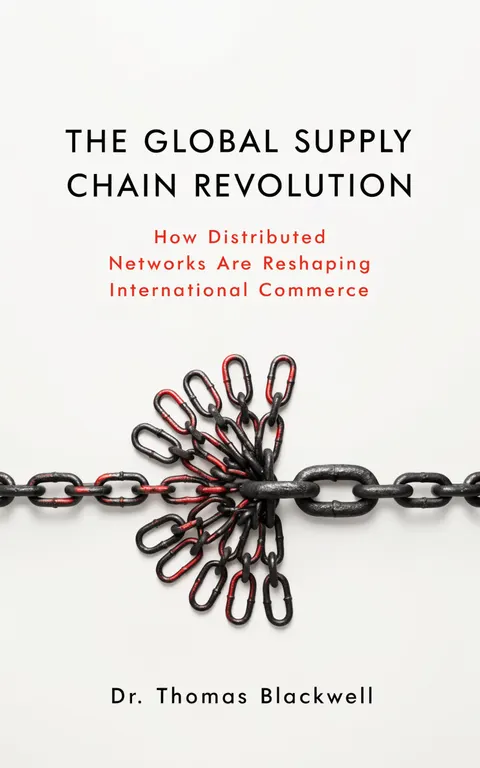
This is where planning and testing become your secret weapons. Before locking in a final design, it’s smart to explore different concepts. Using an AI tool can be a practical way to generate various cover concepts based on your genre and plot summary. This allows you to test different visual directions with your target audience—perhaps by polling your first few email subscribers—to see which design truly hits the mark. An informed decision here gives your book the best possible shot at standing out.

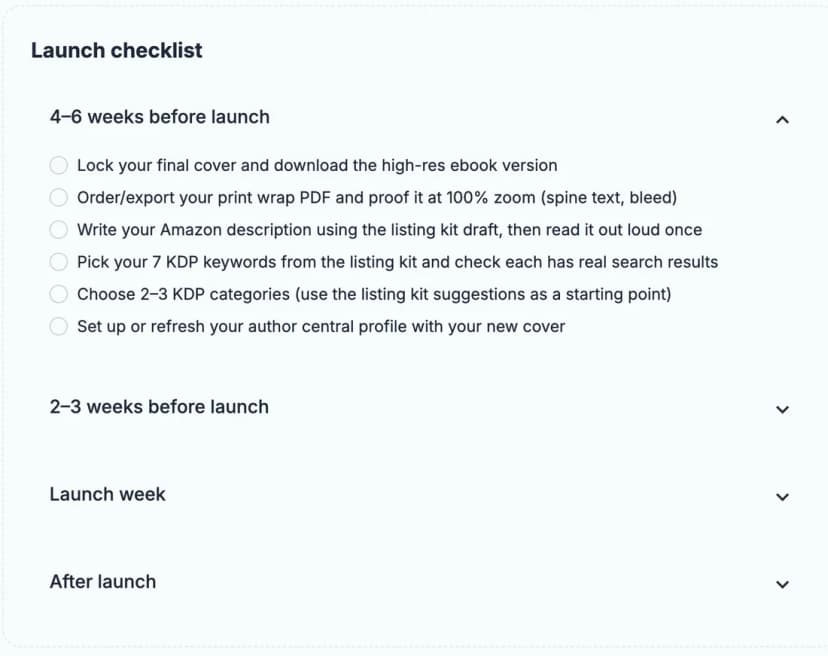
Your Essential Pre-Launch Marketing Checklist

This checklist breaks down the key marketing activities to complete before your book goes live, organized by priority to ensure a smooth and impactful launch.

Timeframe Core Task Why It Matters
6+ Months Out Define Your Ideal Reader & Sub-Genre Informs your cover, blurb, and ad targeting. You can't sell if you don't know who to.
4-6 Months Out Set Up Author Website & Email List Starts building your audience and gives you a direct line to your biggest fans.
3-4 Months Out Finalize Your Book Title & Subtitle Crucial for keyword optimization and communicating your book's promise to readers.
2-3 Months Out Create Your Book Cover Your single most important marketing asset. Needs to be professional and on-genre.
1-2 Months Out Write Your Book Description (Blurb) This is your sales copy. It needs to hook readers and make them want to click "buy."
1 Month Out Set Up Your Author Central Profiles Optimizes your presence on Amazon, Goodreads, and other key retailer sites.
2-4 Weeks Out Plan Launch Week Promotions & Ads Secures promo spots and prepares your ad campaigns to go live.
1-2 Weeks Out Prepare Launch Emails & Social Posts Has all your content ready to go so you can focus on engaging with readers on launch day.

Working through these steps methodically will put you in a far stronger position than most self-published authors. You're not just throwing a book out there and hoping for the best; you're building a real foundation for long-term success.

Making Your Book Impossible to Miss on Amazon

Your Amazon book page isn’t just a listing; it’s your digital storefront. For most indie authors publishing on KDP, this is where the magic happens. Success boils down to mastering this single platform, treating your page not as a static placeholder but as a dynamic sales machine built for Amazon’s A9 algorithm and the actual readers you want to reach.

Think of Amazon as a giant search engine for things people want to buy. When a reader types "dystopian sci-fi with a strong female lead," the algorithm zips through millions of books to deliver the perfect match. Your entire job is to send crystal-clear signals—through your keywords, categories, and description—that your book is the perfect match.

Decoding Amazon Keywords

Keywords are the absolute bedrock of your book's discoverability. Many authors stumble here by picking broad, hyper-competitive terms like "thriller" or "romance." Sure, it's accurate, but it also throws your book into an ocean with hundreds of thousands of others, making it virtually invisible.

The real goal is to unearth those specific, lower-competition phrases that readers are actually typing into the search bar. We’re talking about "long-tail keywords."

  • Instead of "fantasy," think "epic fantasy with dragons and magic."
  • Instead of "mystery," try "cozy mystery with a female amateur detective."

A great way to find these is to start typing ideas into the Amazon search bar and pay close attention to the auto-fill suggestions—those are real searches from real readers. Also, be a detective. Look at the top-selling books in your niche. Scroll down to their "Product details" section and see which categories they’re ranking in. These are goldmines of information for your own strategy.

Key Takeaway: Those seven KDP keyword slots are precious real estate. Fill every single one with unique, researched long-tail phrases. Don’t waste space repeating words from your title or subtitle; Amazon already indexes those for you.

Writing a Book Description That Actually Sells

Once a reader lands on your page, your description has one purpose: turn that flicker of curiosity into a sale. This is your sales pitch. It needs a hook that grabs them, a quick rundown of the central conflict, and a final, compelling line that makes hitting "Buy Now" feel like the only logical next step.

Even the most brilliant blurb can be ruined by bad formatting. Nobody wants to read a giant, intimidating wall of text. A little bit of simple HTML can make all the difference in guiding the reader’s eye.

  • Use <b> and <i> tags to make key phrases bold or stand out.
  • Break up sections with <h3> or <h4> for short, punchy subheadings.
  • Use <ul> and <li> to create bulleted lists that are easy to scan.

This simple bit of formatting makes your page look more professional and is far easier to digest, which can give your conversion rate a serious boost.

Choosing Categories to Chase That Bestseller Tag

Picking the right sales categories is one of the most powerful—and most misunderstood—tricks in the indie author playbook. If you can get your book into a less crowded, more niche category, it becomes exponentially easier to earn that coveted orange #1 Bestseller tag.

Don’t just list your book under "Fiction > Thriller." Dig deeper. Look for sub-categories like "Thrillers & Suspense > Psychological" or even "Thrillers & Suspense > Espionage." Snagging a bestseller tag in a smaller pond gives you incredible social proof and can kickstart Amazon's algorithm into showing your book to a much wider audience. If you're just starting out, our comprehensive guide on self-publishing on Amazon walks through these foundational steps in more detail.

Your Cover: The Ultimate Sales Tool

At the end of the day, all your hard work optimizing keywords and categories leads a reader to one critical moment of decision. And more often than not, that decision comes down to your cover.

It has to pop, even as a tiny thumbnail. A professional cover that screams "this is the genre you love" acts as a powerful visual shortcut for readers. It’s the final nudge that turns a casual browser into a committed buyer. And if you're ready to take things to the next level, you can even find influencers on Amazon that boost sales to get your amazing cover in front of the right audiences right on the platform itself.

Executing a High-Impact Launch Week

Your launch week is showtime. This is your single best chance to feed the Amazon algorithm exactly what it wants: a sudden, concentrated burst of activity. Think sales, reviews, and reader engagement all hitting at once.

This isn't about crossing a finish line; it's about igniting a rocket. The goal is to generate enough initial thrust to get your book into a stable orbit where Amazon starts showing it to new readers all on its own. Everything you've done so far—building your audience, perfecting your cover, and optimizing your book page—has been leading up to this.

Let's break down the playbook for making it happen.

The key phases of research, optimization, and conversion all work together to build discoverability over time, as this timeline shows.

Amazon discoverability timeline showing research, optimization, and conversion steps from Q4 2022 to Q4 2023.

A great launch isn't just a one-day event; it's the peak of a carefully planned campaign.

Mobilize Your Advance Reader Team

Let's be blunt: the most critical piece of a strong launch is social proof. And on Amazon, that means early reviews.

A book with zero reviews is a red flag for most shoppers. It feels like a risk. But a book with even five to ten honest reviews? Now it looks vetted, trustworthy, and worth a closer look. This is where your Advance Reader Copy (ARC) team becomes your secret weapon.

An ARC team is a group of dedicated readers who get a free, early copy of your book. In return, they agree to leave an honest review on or right after launch day. You can find these readers on your email list, in a private Facebook group, or by using services like BookSprout.

Get your ARC team locked in at least 3-4 weeks before launch. This gives them plenty of time to actually read the book without feeling rushed, which is essential for getting the kind of genuine, thoughtful reviews that persuade other buyers to click "Add to Cart."

Coordinate Your Promotional Calendar

A massive launch is all about strategic coordination. You want to stack your promotions to create a tidal wave of sales, not just a few scattered ripples.

Pull up a simple calendar and map out your launch week (Day 1 through Day 7). A deep dive into data-driven product launch strategies for Amazon can offer some fantastic, actionable ideas for this phase.

Here’s what you should be scheduling for each day:

  • Newsletter Swaps: Arrange features with other authors in your genre. This is often free and puts your book in front of a warm audience that’s already proven they buy books just like yours.
  • Paid Promotions: Book your paid placements on sites like BookBub, Freebooksy, or Bargain Booksy. A single promo with the right service can drive thousands of sales in one day.
  • Ad Campaigns: Have your Amazon or Facebook ad campaigns built, approved, and ready to go live on launch day. Start with a sensible daily budget and keep a close eye on performance.

The real magic happens when you sustain sales momentum for at least 3-5 consecutive days. This consistent activity signals to Amazon's algorithm that your book is relevant, triggering it to start showing your book organically to entirely new audiences.

Leverage Social Media Authentically

Launch week on social media should feel like a party, not a constant sales pitch. Readers connect with authors, not just products. Your job is to create content that invites your followers to join the celebration.

Instead of just posting "Buy my book!", try these approaches:

  • Share Behind-the-Scenes Glimpses: Post a picture of your chaotic "author desk," a celebratory coffee, or a short video talking about how it feels to finally hit publish. Make it personal.
  • Run a Fun Giveaway: Offer a signed copy, a small Amazon gift card, or some genre-related swag. Ask followers to share your launch post to enter. It's a simple way to expand your reach.
  • Showcase Early Reviews: When those first amazing reviews from your ARC team start rolling in, screenshot them. Share them in a post with a genuine thank you. It's powerful social proof.

The goal here is to spark real excitement that gets people talking and sharing, which naturally drives traffic back to your book page. By combining a fired-up ARC team, a tightly coordinated promo schedule, and authentic social buzz, you create the sales velocity needed to make your launch a massive success.

Building Your Readership for the Long Haul

A big launch week is incredible, but a single spike doesn't build a career. The real craft—and the most rewarding part of being an indie author—is turning those first-time buyers into a loyal readership. This is where we shift from short-term tactics to long-term strategies that keep the sales coming long after the launch-day confetti has settled.

A cozy setting with a tablet showing 'Free Sample', an open book, and a 'GROW YOUR LIST' banner.

At the heart of it all is building an audience you can talk to directly. This insulates you from the whims of Amazon’s algorithm and the ever-changing rules of social media.

Your Email List is Your Most Valuable Asset

Let’s be clear: your email list is the only marketing channel you truly own. It’s a direct line to your biggest fans, people who have literally raised their hands and asked to hear from you. For the long game, everything starts and ends with this list.

But how do you get people on it? You need an irresistible "reader magnet." This isn’t just a random freebie; it’s a value exchange. You’re offering them something exclusive and genuinely cool in return for their email.

Effective Reader Magnet Checklist:

  • Prequel Short Story: Give new readers a taste of your world and characters.
  • Exclusive Epilogue: Offer a "what happened next" scene that provides extra closure.
  • First Few Chapters: Let them get hooked on your writing and the story before they buy.
  • Character Dossier or World Map: Provide bonus content that deepens the world for true fans.

Whatever you choose, make sure it’s high-quality and directly tied to the book you're selling.

Write Newsletters People Actually Want to Open

Once you have subscribers, the goal is to build a relationship, not just bombard them with buy links. Your newsletter should feel like a welcome letter from a friend, not a sales flyer.

Think of a great author newsletter as 80% entertainment and 20% marketing. Share personal stories, behind-the-scenes tidbits about your writing, or even just recommend a few other books you’ve loved. When you finally do announce a new release, your audience will be far more excited because they trust you.

A loyal email list is the key to building a sustainable author business, allowing you to launch future books to an eager audience and potentially even sell directly from your website, keeping a much higher percentage of your royalties.

Cultivate a Community, Not Just a Following

Social media can be a fantastic tool, but its real power is in building a community, not just shouting into the void. Stop treating your profile like a billboard and start treating it like a conversation.

Pick one or two platforms where your ideal readers hang out and focus your energy there. Share content that fits your brand and the themes of your books. Ask questions, run polls, and—most importantly—reply to comments. Start conversations. For a deeper dive into this, our guide on how to self-publish a book breaks down how building an author platform is a crucial piece of the puzzle.

When you create a genuine connection, you build something far more valuable than followers: you build trust. That trust not only fuels your author business for the long haul but gives you an army of fans ready to champion your work for years to come.

Scaling Your Sales With Paid Advertising

Once you have a handful of good reviews and a steady trickle of organic sales, it's time to consider pouring gasoline on the fire. That's what paid advertising is. It’s a powerful engine for reaching readers who would never find you otherwise and truly scaling your author business. But diving in without a plan is the fastest way to burn through your cash.

This is a no-nonsense guide to getting started with platforms like Amazon Ads without breaking the bank. The goal is a simple, test-and-learn approach so you can figure out what actually works for your book.

Demystifying Key Advertising Metrics

Before you spend a single dollar, you need to speak the language. The ad world is full of acronyms, but you only need to understand a few key ones to start making smart decisions.

  • Impressions: How many times your ad was shown on a screen.
  • Clicks: The number of people who actually tapped or clicked on your ad.
  • CTR (Click-Through Rate): Clicks ÷ Impressions, shown as a percentage. A low CTR is a huge red flag that your ad creative—almost always the cover or the ad copy—isn't grabbing attention.
  • ACOS (Advertising Cost of Sale): Specific to Amazon, this measures ad spend against the sales made from those ads (Ad Spend ÷ Ad Sales). If you spend $5 and make a $20 sale, your ACOS is 25%.

Your ACOS is your profitability gauge. If your royalty on a book is 70% and your ACOS is 35%, you're profitable. But if that ACOS creeps up to 80%, you’re losing money on every sale driven by that ad.

Knowing these numbers is the difference between gambling and investing.

Getting Started With Amazon Ads

For most indie authors, Amazon Ads is the most logical place to start. You’re advertising to people who are literally on the world's biggest bookstore with their credit cards ready.

The easiest entry point is Sponsored Products ads. These are the ads that pop up in search results and on the product pages of other, similar books.

You have two main ways to target them:

  1. Keyword Targeting: You bid on the exact phrases you think readers are typing, like "enemies to lovers space opera" or "cozy mystery with a cat." This is powerful because you're catching readers who already know what they want.
  2. Product Targeting: This lets you place your ad directly on the sales pages of other books. Think of your biggest competitors or authors who write in a similar style. You can also target broader categories, like "Thrillers > Psychological."

A practical starting point: Begin with an "automatic" campaign. Set a small daily budget—say, $5-$10—and let Amazon do the work for a week or two. Amazon will test different keywords and placements for you. This is a low-risk way to gather data. Once you see which search terms are actually converting into sales, you can take that intel and build a much more effective "manual" campaign.

Common Pitfalls for New Author-Advertisers

Many authors get frustrated and quit ads way too early, almost always because they've stumbled into one of these common and completely avoidable traps.

Mistake #1: Bidding on Overly Competitive Keywords Trying to rank for "fantasy" or "romance" is a fool's errand. You're competing against major publishing houses with deep pockets. You'll blow through your money in hours with nothing to show for it. Get specific. Target niche, long-tail keywords that signal a reader is ready to buy.

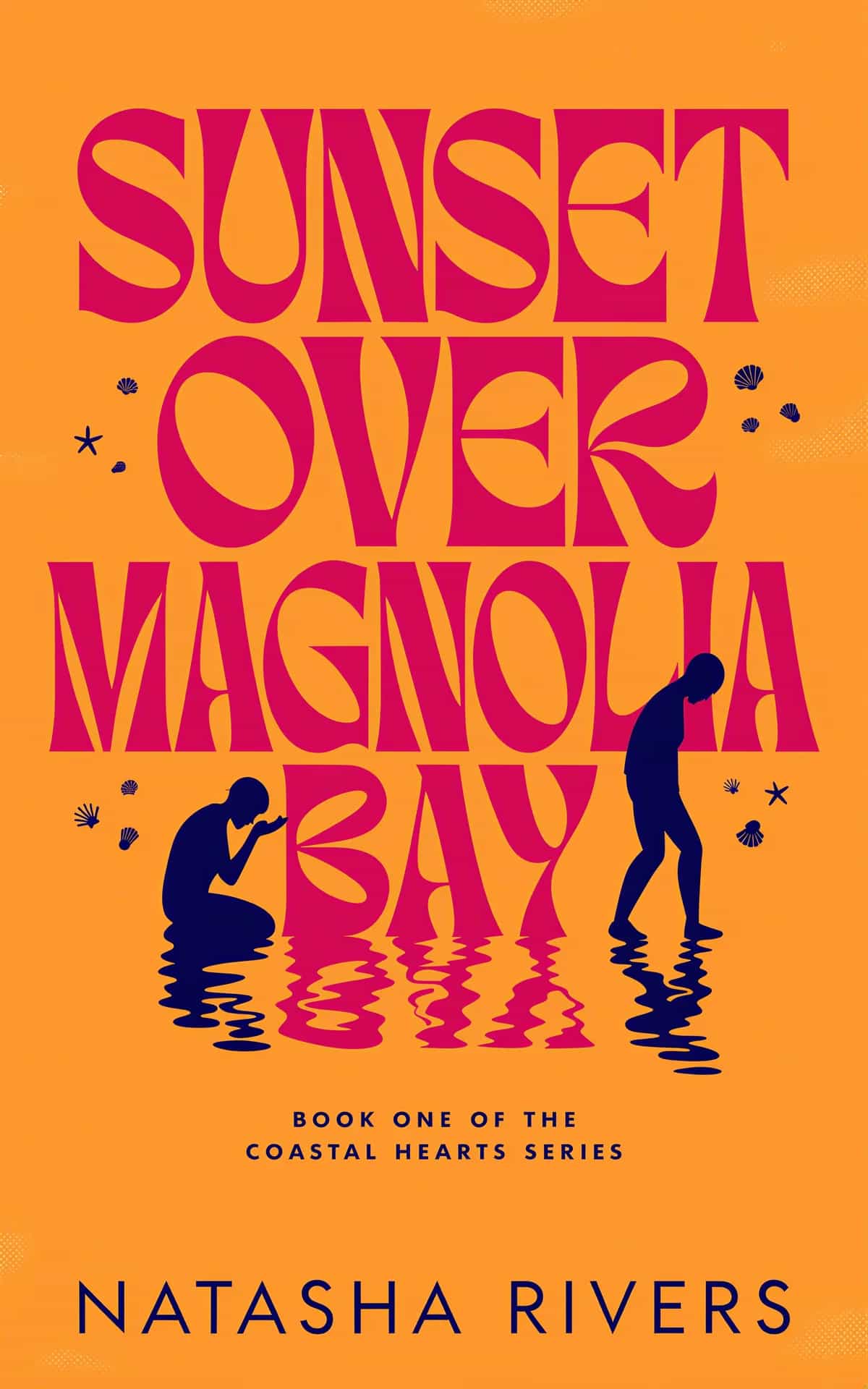
Mistake #2: Using a Cover That Doesn't Convert Let's be blunt: your book cover is your ad. It's 90% of what people see. If it looks amateurish or doesn't scream its genre from a mile away, people will scroll right past, no matter how clever your targeting is. A killer cover can make or break a campaign. For instance, just look at these professional thriller book cover examples—they immediately set a tone and create intrigue. Before you even think about spending money on ads, make sure your cover is up to professional standards.

Mistake #3: Giving Up Too Soon Your first ads are not going to be wildly profitable. That's perfectly okay. The goal of your initial campaigns isn't to get rich; it's to gather data.

Think of your first $50-$100 in ad spend as an educational expense. You are paying to learn what works for your unique book, which keywords actually lead to sales, and what ad copy makes readers click.

Paid advertising is a skill, and like any skill, it takes time to develop. Start small, obsess over your metrics, and treat everything as a test. Before you know it, you’ll have built a reliable system for scaling your sales and finding thousands of new fans.

Common Questions About Marketing a Self-Published Book

Jumping into the world of indie publishing always brings up a ton of questions. Let's tackle some of the most common ones from authors trying to wrap their heads around marketing their book.

How Much Should I Budget to Market My First Book?

There’s no magic number, but a realistic starting point for a debut author is usually somewhere between $500 and $1,500. This is an investment in foundational assets that will pay you back for your entire career.

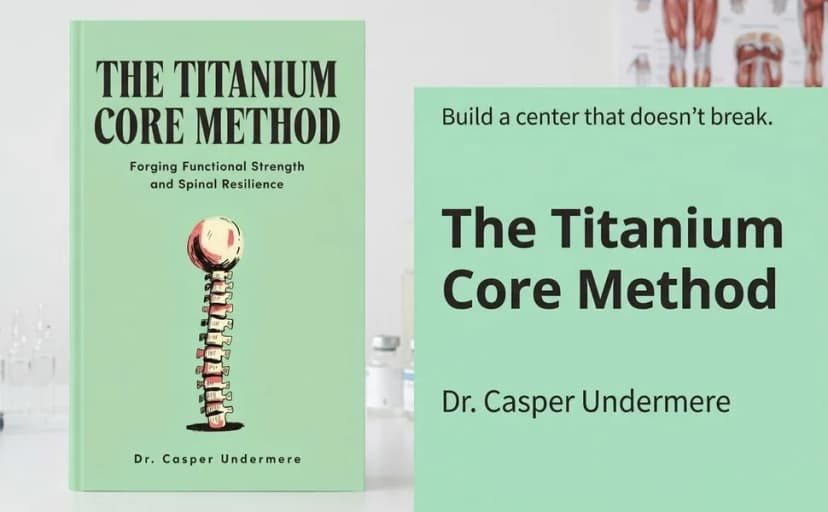
Before you spend a single dollar on promotion, you must nail the non-negotiables: professional editing and a killer, genre-appropriate book cover. Your cover is your #1 sales tool. A great cover, like some of these fantasy book cover examples, does the heavy lifting for you. This is where a good AI tool can be a game-changer, letting you generate and test concepts to see what resonates with readers before you commit serious cash.

Once those are locked in, the rest of your budget should go toward building your author platform:

  • Author Website: Plan on about $150 a year for your domain and hosting.
  • Email Service Provider: A starter plan will run you around $20 a month.
  • Ad Experiments: Set aside a small amount, maybe $5-$10 a day, to start learning the ropes on a platform like Amazon Ads.

The key is to focus your money on assets with long-term value, like building your audience, rather than blowing it all on a one-time promo that gives you a sales spike for a day.

What Is the Single Most Effective Tactic for a New Author?

Hands down, the most powerful thing a new author can do is build an email list. Ads get you clicks, social media gets you likes, but your email list is the only marketing channel you actually own.

Think about it: an email list is a direct, unfiltered line to your biggest fans. It's how you’ll announce your next book, share cool behind-the-scenes stuff, and build a real community of readers who will stick with you for the long haul. Social media algorithms can change overnight and wreck your reach, but that list is yours forever.

Start from day one. Create a compelling "reader magnet"—a free short story, a bonus chapter, anything your ideal reader would love—and offer it on your website in exchange for their email. It's the best investment you'll ever make.

How Far in Advance Should I Start Marketing?

To do this right and avoid a massive scramble on launch day, give yourself a runway of at least three to six months before your release date. This isn't about hype; it's about building a solid, sustainable foundation for a successful launch.

Spreading things out takes the pressure off and lets you build real momentum. Here’s a practical timeline:

  • 3-6 Months Out: This is your platform-building phase. Get your author website live, start growing that email list, and find where your readers hang out online. Start engaging with them, not to sell, but to connect.
  • 1-2 Months Out: Now you can switch to launch-specific tasks. This is the perfect time to rally your ARC (Advance Reader Copy) team and start booking any promotional spots you want for your launch week with services like BookBub.

Following a phased approach like this means that when you finally hit that "publish" button, you’ll have an audience of eager readers already waiting to buy.

Ready to Create Your Own Book Cover?

Turn your story into a visual masterpiece. Fill in the details below to start generating professional covers instantly.

A brief description helps generate more relevant covers.

0/1000

It usually takes about 1-2 minutes to generate your unique covers.

Best for NonFiction

Title Block

Title Block

Typographic

Modern Minimalist Icon

Modern Minimalist Icon

Illustrated

PRO
Editorial Poster

Editorial Poster

Typographic

PRO
Huge Typography Solid

Huge Typography Solid

Typographic

PRO
Huge Typography Patterned

Huge Typography Patterned

Typographic

PRO
Full-Bleed Photo + Bold Type

Full-Bleed Photo + Bold Type

Photo

PRO
Object on Solid + Clean Type

Object on Solid + Clean Type

Photo

PRO
Type Top / Photo Bottom

Type Top / Photo Bottom

Photo

PRO

Leave empty to let AI choose the best styles for your genre

0/1000
0/1000

You can use just Title, Author, and Genre and refine later