
Unpacking Book Cover Design Cost For Your Next Bestseller
Discover the real book cover design cost. This guide breaks down pricing from DIY to pro agencies, helping you budget for a cover that sells.
Posted by
 Pablo Yáñez
Related reading
15 AI Tools for Graphic Designers: A Practical Guide for Authors
Speed up your workflow with the best AI tools for graphic designers. Explore top solutions for image generation, layout, and typography in our 2026 guide.
A Guide to Digital Collage Art for Book Covers
Learn to create stunning book covers with digital collage art. Our guide covers tools, techniques, and AI-assisted workflows for indie authors.
Your Guide to the Burgundy Color Code for Book Covers
Discover how to use the burgundy color code for your book cover. Get HEX, RGB, and CMYK values to create a cover that sells on Amazon KDP.
Ready to design your cover?
Use our AI book cover generator to create tailored book cover concepts in minutes.

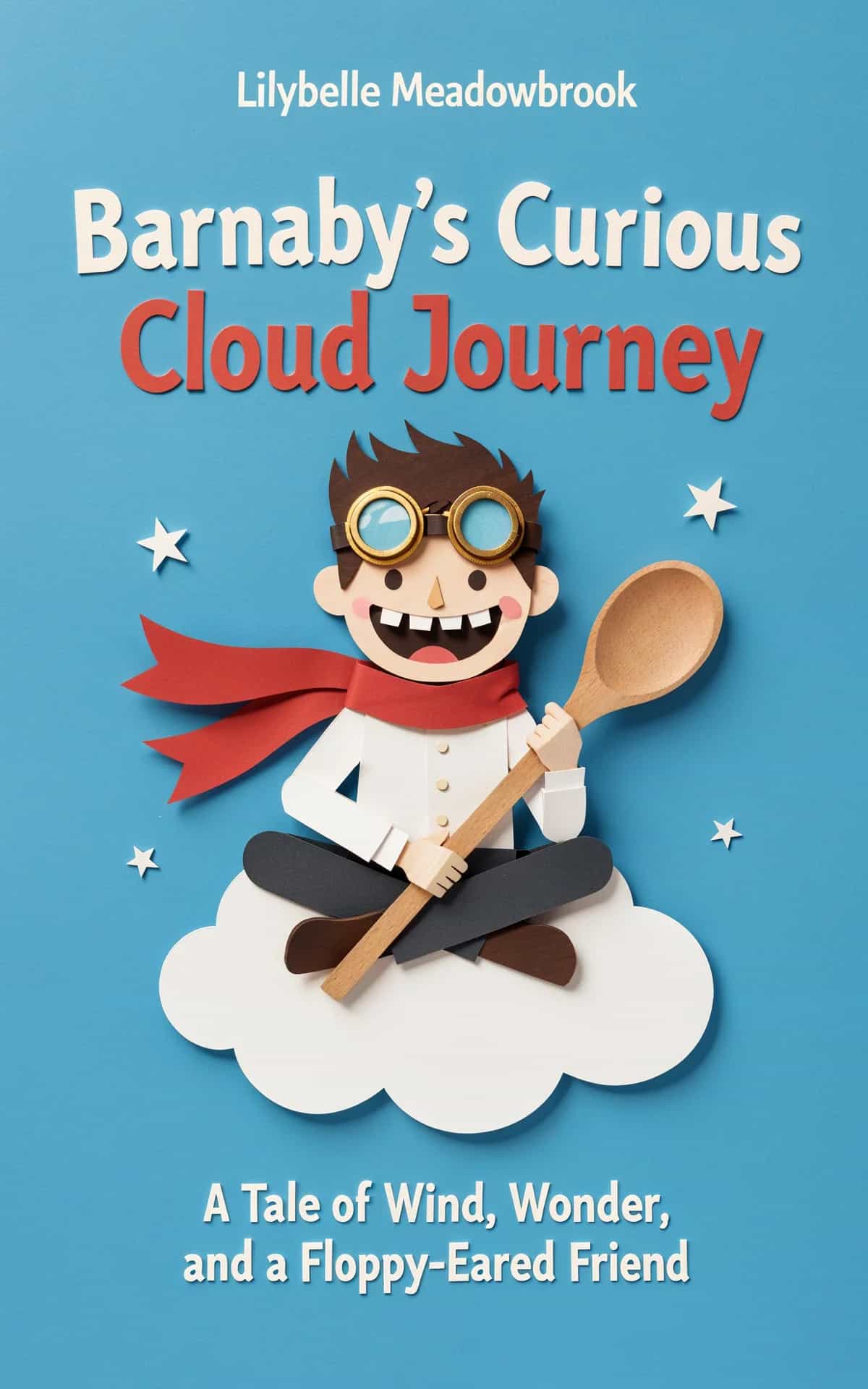
So, how much should you actually budget for a book cover? The honest answer is it can range from absolutely free (if you do it yourself) to well over $3,000 for the full agency treatment.
For most indie authors, the sweet spot for a professional, high-quality cover that actually sells books falls somewhere between $350 and $1,500. This is more than just an expense; it's a critical investment in your book's future.
Your Quick Guide To Book Cover Design Costs

Figuring out the cover design landscape is your first step toward making a smart investment. Think of it like buying a car. You could get a cheap, basic model that just gets you from A to B, a reliable mid-range sedan, or a luxury sports car with all the bells and whistles. Each serves a purpose, but the cost, quality, and experience are worlds apart.
Book covers work the same way. The price tag can swing wildly, from $0 for a DIY design on a platform like Canva (though premium assets can add up) all the way to $3,000+ for a bespoke cover from a top agency. Your final choice really boils down to your budget, your genre’s expectations, and where you are in your author journey.
To make this simple, we can break down the options into four main buckets. Each has its own price range and is best suited for a certain type of author. This gives you a quick map of the territory before we get into the nitty-gritty details.
Book Cover Design Cost At a Glance
The table below gives you a bird's-eye view of your options. It compares the four primary ways to get a book cover, laying out the typical costs, who it’s really for, and the main trade-off you're making with each choice.
| Design Method | Typical Cost Range | Best For... | Key Trade-off |
|---|---|---|---|
| DIY & AI Tools | $0 – $100 | Authors on a shoestring budget or those making a cover for a non-commercial project. | Professionalism and uniqueness. There's a high risk of ending up with something generic or amateurish. |
| Premade Covers | $50 – $250 | Genre fiction authors who need a fast, affordable, professional cover that hits all the right market trends. | True originality. The design is sold only once, but the stock photos and core elements may not be unique. |
| Freelance Designer | $350 – $1,500+ | Authors who want a completely custom, unique cover designed specifically for their story and brand. | Time and collaboration. It requires a clear brief and good communication to get the result you want. |
| Design Agency | $1,500 – $3,000+ | Established authors or publishers needing a premium, market-tested design backed by a full creative team. | Cost. This is a major investment reserved for projects where the stakes are incredibly high. |
This table should help you quickly pinpoint which path might be right for you. While the options can feel overwhelming, there's a solution for every budget.
A great book cover is your best salesperson, working 24/7 on digital shelves. The initial investment might seem steep, but it directly impacts your book's visibility, clicks, and ultimately, your sales.
For authors trying to find that perfect balance, exploring different avenues for affordable book cover design can lead you to professional results without the sticker shock. The real key is matching your budget and your book's needs to the right solution.
What Actually Drives Your Cover Design Cost
So, why does one book cover cost $50 while another comes with a $1,500 price tag? It’s not random. The final number boils down to the specific ingredients going into your design.
Think of it like building a house. A simple, prefabricated cabin isn't going to have the same cost as a custom-built mansion with unique architectural features. The materials, the labor, the complexity—it all adds up. The same logic applies to book covers. Understanding what drives the price is the first step to setting a realistic budget and getting exactly what you pay for.
Format Complexity From Ebook To Hardcover
One of the simplest factors that shapes your cost is the format you need. An eBook-only design is always the cheapest route because it's just the front cover. Think of it as the digital movie poster for your book.
But the moment you step into the world of print, the work gets more involved.
- Paperback (Full Wrap): This isn't just a front cover. The designer has to create a spine and a back cover, too. They’ll need your final page count to calculate the exact spine width and then format the back with your blurb, author bio, and barcode.
- Hardcover with Dust Jacket: This is the most complex of all. It includes the front, back, and spine, plus two inner flaps that need to be designed. These flaps are prime real estate for extra marketing copy or more about you, the author.
It makes sense, then, that a package including eBook, paperback, and hardcover designs will cost more than an eBook cover alone. You’re asking for more work. Most designers recognize this and offer bundled packages, which usually give you a much better deal than commissioning each format one by one.
The Art Itself: Stock Photo Vs. Custom Illustration
The imagery on your cover is probably the single biggest factor affecting the price. Your choice here is usually between two paths: using licensed stock photography or commissioning a completely original, custom illustration.
A cover made from stock photos is the more budget-friendly option. Here, the designer’s magic lies in finding the right images, licensing them, and blending them into something that looks totally unique. You're paying for their expertise in photo manipulation and the licensing fees, which can run anywhere from a few bucks to a few hundred.
A custom illustration, on the other hand, is a bespoke piece of art created from the ground up, just for your book. This is the go-to for genres like fantasy, sci-fi, and children's books where you need something that just doesn’t exist in a photo library. Because an artist is concepting, sketching, and rendering a unique image, the time and skill required are immense—and the price reflects that.
A custom illustrated cover can easily soar past $1,000, while a really sharp photo-manipulated design might land in the $400 to $800 range. The difference is paying someone to create art versus paying them to arrange existing art.
Revisions And Usage Rights
Finally, let's talk about two details that often get overlooked: revisions and rights. Most designers will include a certain number of revision rounds in their base price—usually two or three. If you need more tweaks after that, you'll almost certainly pay extra for each new round. This is why a crystal-clear design brief from the start is your best friend; it cuts down on the back-and-forth that can inflate your costs.
Usage rights are also a huge deal. A standard contract gives you the right to use the design as a book cover in all its formats. But what if you want to slap that awesome artwork on t-shirts, posters, or other merch? You’ll likely need to negotiate for extended or exclusive rights, which will add to the final cost. Always get this sorted out before the project begins to avoid any headaches down the road.
Choosing Your Design Path From DIY To Agency
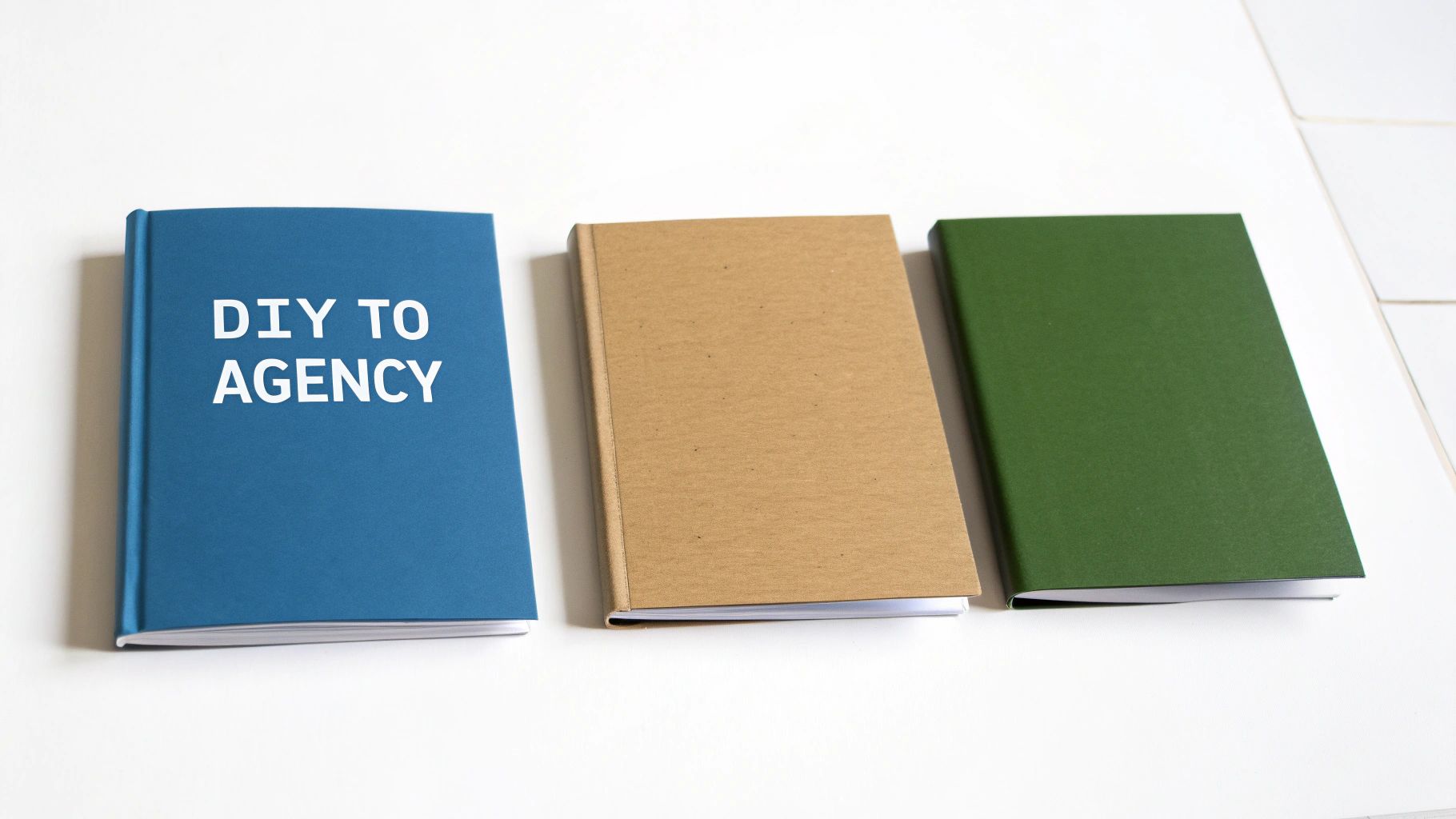
Stepping into the world of book cover design can feel like standing at a crossroads. One path leads to a scrappy, do-it-yourself adventure, while another winds toward a full-service creative agency. Each route has its own price tag, timeline, and final destination.
Your job is to pick the path that actually gets your book where it needs to go, without emptying your wallet or compromising your vision. Think of it like booking a vacation: you could backpack on a shoestring, stay at a comfortable all-inclusive, or hire a private guide. Let's walk through the four main routes so you can decide which trip is right for you.
The Do-It-Yourself And AI Route
For authors whose clock has more hours than their bank account has dollars, the DIY path is a tempting first step. Tools like Canva have made basic design more approachable, and AI art generators like Midjourney can spit out incredible visuals from a simple text prompt. The main draw here is the unbeatable book cover design cost, which can be as low as $0 if you stick to free tools.
But this road is full of potholes. The learning curve for design principles is steep, and what looks "good enough" to you might scream "amateur" to a reader who knows your genre. Even with great software, you’re the one in the driver's seat. For a look at your options, check out our guide to the best book cover design software.
The real danger with DIY and AI isn’t just making a bad cover—it’s making the wrong cover. A design that misrepresents your genre is like sending the wrong invitation. It attracts readers who won't like your book and pushes away the ones who would have loved it.
The Fast And Affordable Premade Cover
Think of a premade cover as a professionally designed outfit on a mannequin. A designer creates a great-looking cover for a specific genre and puts it up for sale. When an author buys it, the designer customizes it with their title and name, and that exact design is retired forever. It’s a fantastic middle ground, giving you professional quality for $50 to $250.
This is the perfect choice for a few types of authors:
- Genre fiction writers: If you’re in romance, thrillers, or fantasy, you know visual trends are king. Premades nail these.
- Authors on a deadline: Forget waiting weeks. A premade can be ready in a couple of days.
- New authors testing the waters: It’s a way to look like a pro without a massive upfront investment.
The only real trade-off? You get what you see. Customization is pretty much limited to the text. While the core stock image might be used elsewhere, the final, composed cover is uniquely yours.
Hiring A Freelance Designer
When your story demands a cover that is 100% original, hiring a freelance designer is the way to go. This is where you get a true creative partner—someone who will (hopefully) read your manuscript, listen to your ideas, and build a concept from the ground up. You can find them on marketplaces like Reedsy, Upwork, and 99designs.
The price for a good freelancer has climbed. The self-publishing boom means millions of authors are competing for top talent. A decade ago, you might have paid $100-$300. Today, expect to pay $300-$800 for a quality custom cover. For that investment, you get a collaborative process that results in a bespoke piece of marketing art built just for your book.
Partnering With A Design Agency
At the very top of the mountain sits the design agency. Here, you're not just hiring one person; you’re hiring a whole team. This often includes a project manager, an art director, and several designers who handle everything from market research and competitor analysis to branding.
This white-glove service comes with a price to match, usually starting around $1,500 and climbing much higher. It’s the right fit for established authors with a solid sales history, publishers juggling multiple books, or anyone launching a book with serious commercial expectations. An agency delivers a level of strategic polish that’s tough to match, ensuring your cover isn't just pretty—it's a weapon in the marketplace.
Seeing Your Cover as an Investment, Not an Expense
It's tempting to lump your book cover in with all the other line items on your publishing budget. A necessary evil, another bill to pay. But that’s one of the biggest mistakes an author can make.
A professional cover isn't a cost—it's your single most valuable marketing asset. It's the tireless salesperson working for you 24/7 on the crowded digital shelves of Amazon, and its return on investment (ROI) is very, very real.
Once you start thinking of your book cover design cost as a strategic investment, the whole game changes. Imagine a reader scrolling through hundreds of thumbnails. They make a split-second, gut-level judgment based entirely on your cover. In that blink of an eye, your cover either earns a click or gets lost in the noise. The sale is won or lost right there.
The Power of a First Impression
A great cover does more than just look nice; it instantly builds trust. When a reader sees a polished, genre-appropriate design, their brain makes a subconscious leap: "If the outside looks this good, the inside must be just as professional."
An amateur cover sends the exact opposite message. It screams, "The author probably cut corners on editing and storytelling, too."
This split-second impression has a direct impact on your bottom line, especially if you're running ads. Let's look at a quick example:
- Scenario A (The DIY Cover): You launch a Facebook ad campaign with a cover you made yourself. It doesn't quite pop, and your click-through rate (CTR) is a sluggish 0.5%.
- Scenario B (The Professional Cover): You invest $500 in a pro design. It’s magnetic, perfectly nails your genre, and your CTR jumps to 2.5%.
Look at that. With the professional cover, you're getting five times more traffic for the exact same ad spend. Your cost-per-click drops through the floor, more potential buyers land on your sales page, and your sales potential explodes—all from that one upfront investment.
"I always judge a book by its cover. The book may be the greatest work of the new century but if it is packaged in a way that communicates carelessness or lack of attention, then that has huge repercussions for the reputation of the work." — Wayne K., Professional Book Designer
From Clicks to Cash
The ROI doesn't end with cheaper ad clicks. It follows the reader all the way to your book’s sales page. A compelling cover that nails your story's tone and genre sets the right expectations from the start.
When a reader clicks through and the book description perfectly matches the promise of the cover, their confidence skyrockets. That hesitation to click the "Buy Now" button melts away.
Think about your conversion rate—the percentage of visitors who actually buy your book. A fantastic cover can easily bump this rate by several points. If that $500 cover helps you sell just 150-200 extra copies of your $3.99 eBook, it has already paid for itself. Every single sale after that is pure profit, generated by that initial decision to invest in quality.
Trying to save a few bucks on your cover is one of the costliest mistakes you can make. A cheap cover might feel like a win today, but it will silently cost you thousands in lost sales, higher ad costs, and missed readers tomorrow. A professional cover isn't an expense; it’s the engine that drives your book's success. You can see how professional designers handle these constraints in these thriller book covers.
Smart Strategies To Manage Your Design Budget
Getting a professional, eye-catching book cover doesn’t have to drain your savings account. Seriously. With a bit of foresight and some smart thinking, you can manage your book cover design cost and walk away with a brilliant cover without breaking the bank. It’s all about working smarter, not just spending more.
The secret is to approach the whole thing like a business partnership. When you have clear communication, solid expectations, and a good sense of where the real value is, you can navigate the costs like a pro. These strategies will help you squeeze every last drop of value out of your budget.
Bundle Your Formats for Big Savings
Here’s one of the easiest wins right out of the gate: think about all your formats from the very beginning. Most authors these days publish in multiple formats—eBook, paperback, and maybe even an audiobook down the line. Commissioning these covers one by one is a guaranteed way to pay more over time.
Instead, look for a package deal. Designers almost always offer bundles that group these formats together for a much better rate.
- eBook + Paperback Wrap: This is the classic combo. The designer nails the front cover, then expands that design to create the spine and back for your print version.
- The Full Trio: This package throws in everything: the eBook, the paperback wrap, and a square-formatted version perfect for an audiobook.
When you commission them all at once, you save the designer a ton of time. They don't have to dig up old files and get their head back into your project months later. That efficiency translates directly into savings for you. Always, always ask a potential designer about their package pricing before you commit to a single format.
Write a Crystal-Clear Design Brief
Want to know the single biggest budget-killer in the design process? Endless revisions. Every single time you go back to your designer with a list of changes, you’re eating up their time. If you blow past the number of revisions included in your contract, you’ll start paying for that time out of pocket. The perfect antidote is a rock-solid design brief.
A great brief is your project's North Star. It’s a simple document that lays out your vision, target audience, and all the essential details so you and your designer are on the same page from day one.
A design brief isn't just a to-do list; it's a tool for mutual understanding. A designer who truly gets your story and your market is far more likely to nail the concept on the first try, saving you both a world of time and money.
Your brief should include these five things:
- Book Title & Author Name: Exactly as they need to appear. No typos!
- Genre & Target Audience: Who are you writing for? What do they expect from a cover in this genre?
- A Short Synopsis: Just one paragraph summing up the plot, conflict, and main themes.
- Mood & Tone: Is your book a dark, gritty thriller or a light, hopeful romance?
- Comparable Covers: Find 3-5 examples of covers in your genre that you absolutely love and, crucially, explain why you love them.
Doing this homework upfront minimizes misunderstandings and costly back-and-forth, making the whole process smoother and cheaper. If you're just starting and want to understand the basics without spending a dime, you can check out guides on how to create a book cover for free to get a feel for the core elements.
Key Questions To Ask a Designer Before Hiring
Before you sign any contracts or send over a deposit, you need to vet your designer. Asking the right questions right now can save you from hidden costs and massive headaches later. Treat this like a job interview—because you're hiring a critical member of your publishing team.
Here’s a quick checklist of must-ask questions:
- What's included in your package? (e.g., eBook, print wrap, 3D mockups?)
- How many initial concepts will I get to see?
- How many rounds of revisions are included? And what’s the cost if we need more?
- What file formats will I get at the end? (You need a high-res JPG for the eBook and a print-ready PDF for the paperback).
- Who owns the rights to the final art? Can I use it for my website, ads, and maybe even merch?
- What's your typical turnaround time?
- What are your payment terms? (A 50% upfront, 50% on completion schedule is very common).
Your Final Checklist For Choosing The Right Path
Figuring out the world of book cover design can feel like you're lost in a forest with a dozen branching paths. Which one is right for you? This final checklist cuts through the noise and boils the decision down to a few key questions.
Answer these honestly, and you'll find the best route for your specific book, budget, and career goals. It’s all about matching your project’s needs with the right level of investment.
Assessing Your Project Needs
First things first, you need to get brutally honest about what your book actually requires to stand out. A rapid-release romance novella has wildly different needs than the debut of an epic fantasy series.
- What's my real budget? Let's be frank. Is it a tight $100, a more comfortable $500, or are you ready for a $1,500+ investment? This number is the single biggest filter for your options.
- How fast do I need this cover? If you're on a tight deadline and need a professional design in a week, a premade cover is your best friend. A custom freelance project, on the other hand, often takes a solid four to eight weeks from that first email to the final files.
- How cutthroat is my genre? Let's face it, genres like fantasy and thrillers are an arms race of amazing cover art. A DIY or low-budget cover will likely get lost in the shuffle, making a top-tier professional design a necessity, not a luxury.
- Is this book part of a series? If the answer is yes, you need a design that can grow with you. A freelance designer can build a cohesive brand identity that ties all your books together, something that's much harder to pull off with one-off premade covers.
This decision tree gives you a visual for how different budget strategies line up with what you're trying to accomplish.
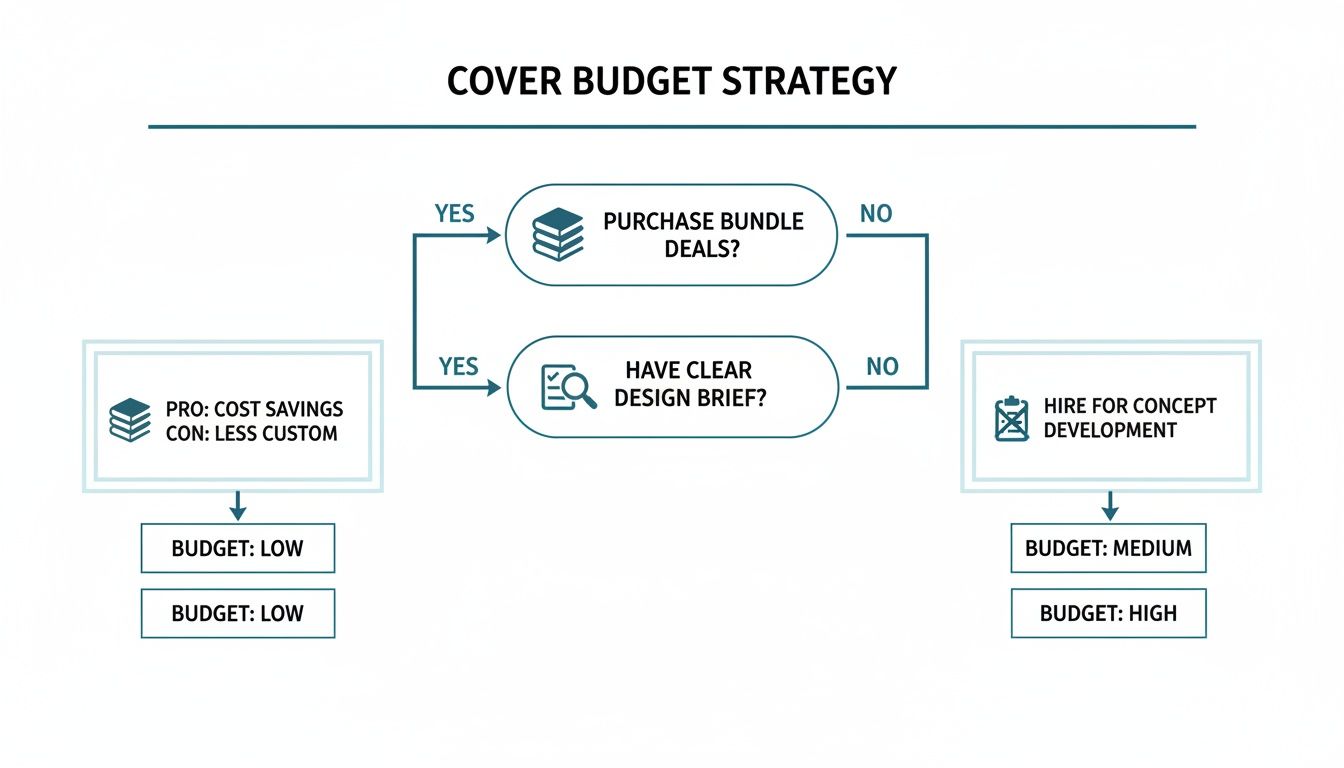
The big takeaway here? A clear design brief and properly vetting your designer are the keys to making any budget—big or small—work harder for you.
Matching Your Needs To A Solution
Once you have your answers, the path forward becomes much clearer. The final book cover design cost isn't just a number; it's a strategic choice that reflects your ambition for your book.
Your cover is a promise to the reader. It sets the expectation for the story inside. Your decision here is about choosing how you want to make that promise—quickly and affordably, or with a bespoke, custom-tailored message.
If your budget is tight and your timeline is short, a premade cover is an excellent, professional-grade choice. But if you need something truly unique that captures a complex story and can evolve into a series brand, investing in a freelance designer is the smartest long-term move you can make.
By weighing your answers with a clear head, you can step forward and choose with confidence.
Of course. Here is the rewritten section, crafted to sound like an experienced human expert and match the provided examples.
Your Top Questions About Cover Design Costs, Answered
Once you get a handle on the basic price ranges, the trickier, more specific questions start to pop up. Let's tackle some of the most common ones I hear from authors trying to nail down their cover design budget.
How Much Should I Budget For a Series?
When you're planning a series, stop thinking about individual covers and start thinking about a package deal. It’s almost always cheaper in the long run. Most designers will knock 15-25% off the per-cover price if you commit to a trilogy or series upfront.
The real goal here is creating a consistent brand. A savvy designer won’t start from scratch every time. They'll build a core visual identity—a recognizable typography style, a consistent layout, a shared color story—that makes each book instantly part of the same family. This saves them a ton of work and saves you a ton of money, all while making your books look sharp and unified on the digital shelf.
What Are The Sneaky Hidden Fees I Should Watch Out For?
The two big culprits are almost always revisions and image rights. Your designer’s initial quote probably includes two or three rounds of tweaks. Anything beyond that? You’ll likely be paying by the hour or per revision round, and those costs add up fast. The best way to dodge this is to be incredibly clear in your initial design brief.
The other landmine is licensing. The standard stock photo license covers you for the book cover itself, but what if you want to print that awesome artwork on t-shirts or mugs? You'll need an extended license, which costs more. Get this stuff in writing. Your contract needs to spell out the exact number of revisions and the full scope of your usage rights before a single dollar changes hands.
A cover design contract isn’t just a formality; it’s your financial safeguard. It should explicitly state the number of concepts, revision rounds, file formats, and the full scope of usage rights to prevent surprise charges later.
Can I Just Use AI-Generated Images For My Cover?
Tread very, very carefully here. Using AI-generated images for a commercial book cover is wading into a legal gray zone that’s getting messier by the day. The core issue is copyright—it's still not clear who, if anyone, legally owns AI art. This means you could be building your brand on shaky ground, leaving you wide open to legal challenges down the road.
On top of that, platforms like Amazon are getting stricter. They've been known to pull books that use AI art if the author can't provide solid proof of ownership. For genuine commercial protection and your own peace of mind, it’s much safer to stick with properly licensed stock photos or commission custom artwork from a human artist.
Ready to Create Your Own Book Cover?
Turn your story into a visual masterpiece. Fill in the details below to start generating professional covers instantly.